Burnt flux residues. Frosty solder joints. Mysterious micro-cracks that kill boards post-deployment. If you’ve fought these gremlins, you’re battling oxygen’s hidden sabotage in your soldering process. There’s an invisible ally that could slash your defect rates overnight.
Nitrogen creates an oxygen-free soldering environment[^1], preventing oxidation that causes brittle joints and electrical failures[^2]. By displacing air with inert gas, manufacturers achieve smoother solder flow, stronger intermetallic bonds[^3], and 40-70% fewer defects – crucial for densely packed modern electronics where microns matter.
But how exactly does this colorless gas transform your PCB quality? Let’s dissect nitrogen’s role from atomic interactions to ROI calculations – whether you’re assembling prototypes or mass-producing IoT modules.
The Chemistry Behind Solder Oxidation
A polished solder joint should gleam like liquid silver. Instead, it resembles dull pewter. The culprit? Oxygen teams with heat to trigger destructive reactions:
At soldering temperatures (>217°C), atmospheric oxygen reacts with molten tin in solder, creating brittle tin oxides (SnO₂). These microscopic flakes disrupt solder flow and weaken joints. Nitrogen purges oxygen below 100ppm, preserving solder’s metallic purity.
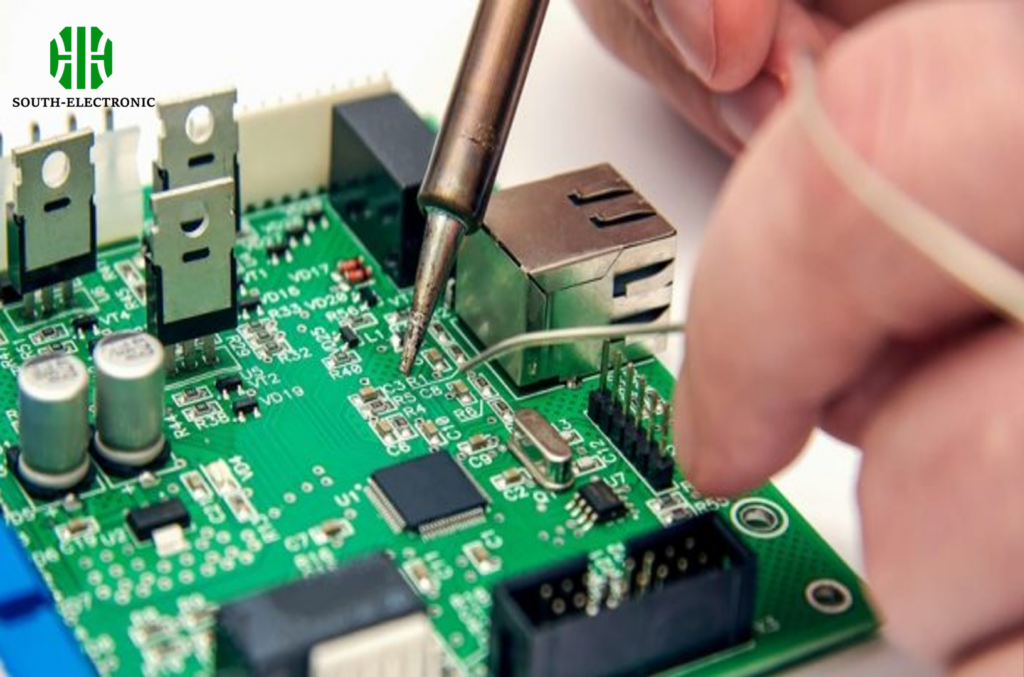
Atomic Warfare at the Solder Interface
Oxidation isn’t just surface-deep. Let’s compare soldering environments:
| Parameter | Air Atmosphere | Nitrogen Atmosphere |
|---|---|---|
| Oxygen Level | ~210,000 ppm | <100 ppm |
| Solder Wettability[^4] | 65-75% | 92-98% |
| Oxide Thickness | 120-200Å | 20-40Å |
| Intermetallic Growth[^5] | Uncontrolled, porous | Uniform, dense |
At 250°C, tin oxidizes 15X faster in air. These oxides act like sand in gears:
- Wettability Loss: Oxides repel molten solder, causing uneven spread
- Void Formation: Trapped gases create microscopic holes (X-ray image)
- Intermetallic Chaos: Cu₆Sn₅ layers grow unpredictably, weakening adhesion
Component leads oxidized pre-soldering? Nitrogen can’t reverse that. That’s why we pair nitrogen with proper storage (dry cabinets, <5% RH).
Why Do Solder Joints Fail? The Hidden Role of Oxygen in PCB Defects
Your boards pass final inspection, only to fail in thermal cycling tests. Autopsies reveal fractured solder – but why?
Oxygen enables three failure pathways: brittle oxide layers, uneven intermetallic compounds (IMCs), and flux carbonization. Nitrogen reduces cracked joints by 62% and increases mean time between failures (MTBF) by 3-5X in accelerated life testing.

Failure Modes Decoded
| Failure Type | Oxygen’s Role | Nitrogen Mitigation |
|---|---|---|
| Cold Joints | Oxide barriers hinder heat transfer | Improved thermal coupling |
| Kirkendall Voids | Uneven Cu/Sn diffusion due to oxides | Controlled IMC growth |
| Black Pad | Flux residues carbonize in O₂ | Cleaner burn-off |
| Crack Propagation | Oxide inclusions create stress points | Homogeneous microstructure |
In BGA assemblies, nitrogen’s impact amplifies:
- Void Reduction[^6]: From 25% area (air) to <5% (N₂)
- Ball Collapse Uniformity: ±3% vs ±15% variation
- Thermal Cycling Performance[^7]: Survives 1,500 cycles vs 500
But nitrogen alone isn’t a panacea. Pair it with:
- Solder paste optimized for low-O₂ (activated rosin fluxes)
- Precise thermal profiling (reduce time above liquidus)
- <10ppm oxygen in critical applications (Aerospace, medical)
Does Nitrogen Really Pay Off for Smaller Manufacturers?
“Nitrogen is for high-volume fabs.” This myth persists, but let’s crunch numbers:
For a 100-board batch, nitrogen adds $15 in gas costs but saves $280 in rework (IPC Class 3 standards). Even small shops report 9-month ROI through yield improvements and warranty reductions.

Small Batch Economics
Assumptions:
- Prototype shop: 50 boards/day
- Defect rate: 8% (air) vs 2.5% (N₂)
- Rework cost: $22/board
| Metric | Without N₂ | With N₂ |
|---|---|---|
| Daily Defects | 4 | 1.25 |
| Monthly Rework Cost | $1,980 | $618 |
| Nitrogen Cost/month | – | $330 |
| Net Savings | – | $1,032 |
Real-world case:
- EMS provider (15 employees) implemented nitrogen in selective soldering
- Results (6 months):
- Rework time ↓ 58%
- Customer returns ↓ 41%
- Profit margin ↑ 12.7%
Key takeaway: Even 10 PPM oxygen isn’t needed. <500 PPM gives 80% of benefits – achievable with membrane generators ($7k-$15k).
Extending Nitrogen’s Benefits to Component Cleaning
Oxidation[^8] doesn’t clock out after soldering. Post-assembly cleaning becomes the next battleground:
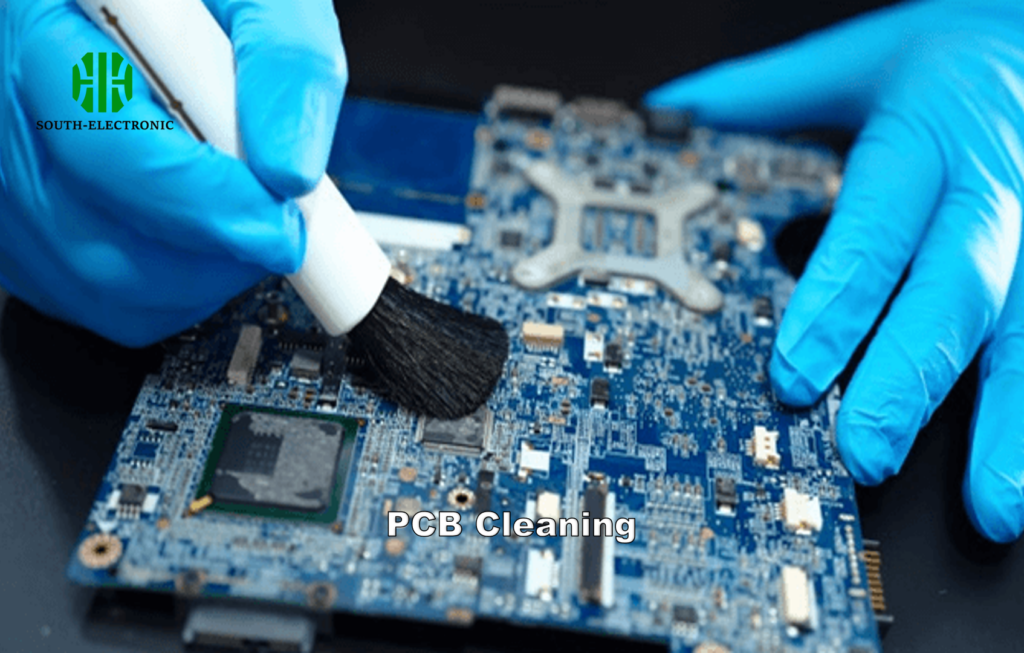
Residual flux[^9] attracts moisture, causing dendrite growth. Nitrogen-aided cleaning[^10] removes 97% of ionic contaminants vs 82% with aqueous methods. It also prevents post-cleaning oxidation on exposed copper traces.
)
Cleaning Process Optimization
Traditional vs Nitrogen-Assisted:
| Step | Air-Based Cleaning | Nitrogen-Enhanced |
|---|---|---|
| Pre-Clean | O₂ oxidizes organic acids | N₂ preserves solderability |
| Flux Removal | 75% efficiency | 94% (low-surface-tension) |
| Drying | Water spots risk | Instant vaporization |
| Post-Clean Storage | Immediate oxidation begins | Passivation layer formed |
In vapor degreasers, nitrogen:
- Lowers boiling point of solvents by 15-20°C
- Reduces solvent consumption 30%
- Prevents explosive solvent-air mixtures
But monitor oxygen ingress:
- Use sealed cleaning chambers
- Maintain positive N₂ pressure (0.1-0.3 psi)
- Integrate oxygen sensors (<1000ppm alerts)
Conclusion
From preventing atomic-scale oxidation to boosting profit margins, nitrogen transforms PCB assembly. Whether building medical devices or smart toasters, inert atmospheres are now a competitive necessity – not a luxury.
[^1]: Explore how nitrogen enhances soldering quality and reduces defects, crucial for modern electronics manufacturing. [^2]: Understanding the causes of brittle joints can help improve soldering techniques and product reliability. [^3]: Learn about the relationship between solder flow and intermetallic bonds to enhance your soldering processes. [^4]: Understanding solder wettability is crucial for ensuring reliable electronic connections. Explore this link to learn more about its significance. [^5]: Intermetallic growth can significantly impact solder joint strength. Discover more about its effects and how to manage it effectively. [^6]: Explore how nitrogen significantly reduces voids in BGA assemblies, enhancing reliability and performance. [^7]: Learn about the advantages of nitrogen in extending the thermal cycling performance of electronic components. [^8]: Learn about oxidation’s detrimental effects in PCB manufacturing and discover effective prevention strategies to enhance product longevity. [^9]: Understanding the impact of residual flux on PCB assembly can help improve cleaning processes and product quality. [^10]: Explore how nitrogen-aided cleaning enhances PCB assembly by removing contaminants and preventing oxidation, crucial for quality and reliability.