Introduction
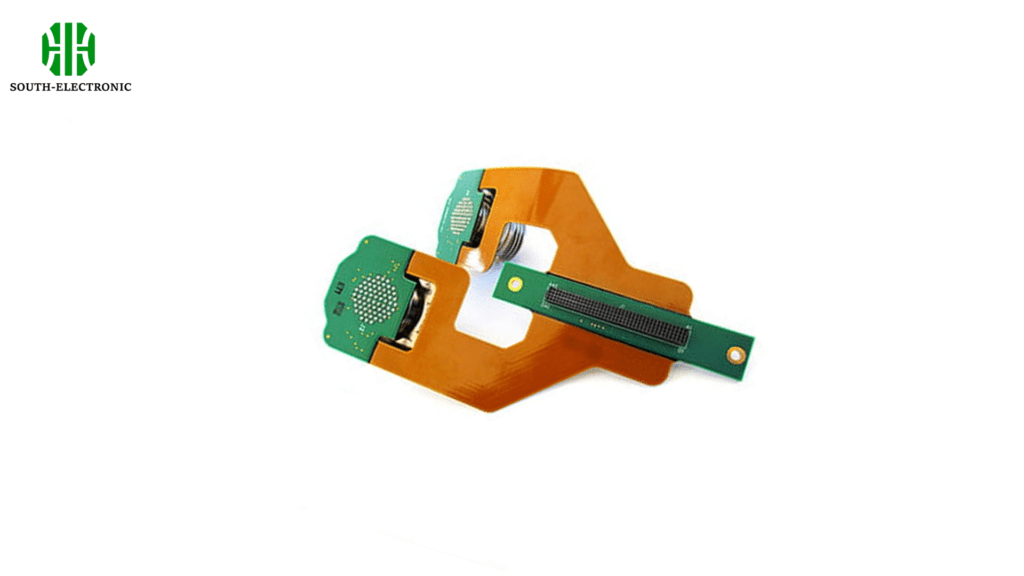
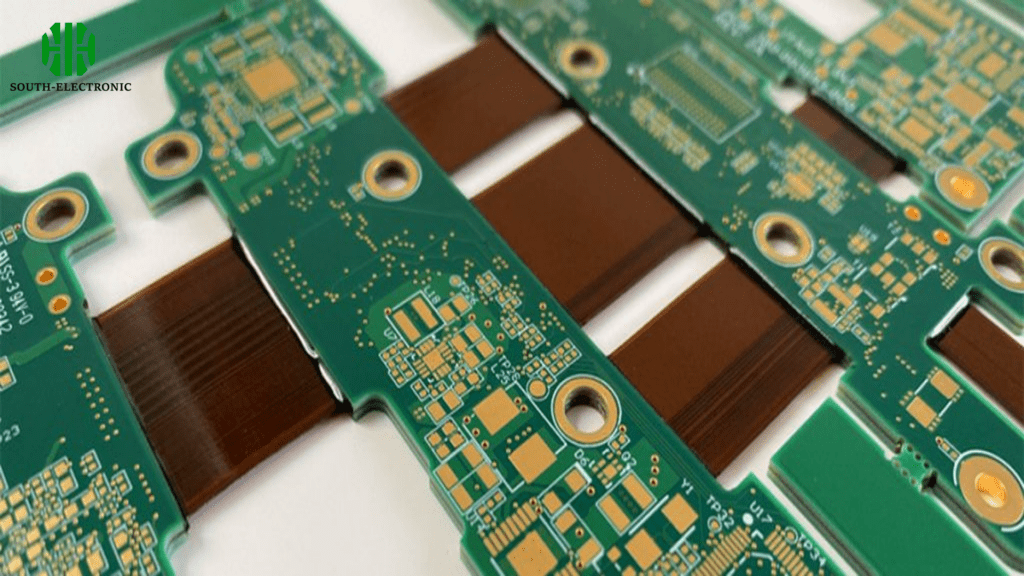
In electronic circuitry design, a “Rigid-Flex PCB” is a hybrid circuit board that merges the qualities of both flexible and rigid PCBs. This innovative combination results in a board that leverages the malleability of soft PCBs while maintaining the robustness and enduring nature of hard PCBs.
These hybrid boards consist of soft sections made from malleable materials like polyimide or polyester. This design is crucial in applications that require bending or flexing. On the other hand, the rigid segments of these boards are made from sturdier substances like fiberglass, providing a solid foundation crucial for supporting more substantial or numerous electronic components. This ingenious incorporation of both PCB types in a single unit allows for an adaptable and comprehensive approach to designing circuits. It empowers engineers to enhance the design and effectiveness of electronic devices by combining the advantages of both flexibility and sturdiness into a unified entity.
Application
Rigid-Flex PCB is widely used in various electronic products, such as daily-use smartphones, tablet computers, automotive electronics and other fields. This includes playing an important role in medical devices such as pacemakers, diagnostic imaging equipment and wearable health monitoring systems. Such hybrid boards are also used in the aerospace field, such as spacecraft, satellite systems and avionics equipment.

Advantages and Disadvantages
Benefits of Integrating Soft and Hard PCB Boards
- Augmented Design Versatility: The flexibility of Rigid-Flex PCBs facilitates more intricate and adaptable designs. Their bendable sections allow these boards to conform to unique shapes and tight spaces, making them perfect for compact electronic gadgets.
- Enhanced Durability and Reliability: These boards decrease the necessity for connectors and wiring between components, reducing the likelihood of failures and thus bolstering the circuitry’s overall dependability. The flexible parts also mitigate vibration impacts and lessen stress on rigid areas, thereby improving the board’s longevity.
- Reduction in Weight and Space: Compared to standard PCBs, Rigid-Flex PCBs are more lightweight and occupy reduced space by combining various board types into one. This is particularly advantageous in sectors like aerospace, automotive, and consumer electronics, where the conservation of space and weight is paramount.
- Simplified Assembly Procedure: The need for fewer individual components and connections simplifies and streamlines the assembly process, potentially lowering labor costs and decreasing production duration.
- Superior Signal Integrity: Incorporating both soft and hard boards can lead to better signal integrity, notably in fast-paced electronic environments, due to the facilitated control over impedance.
Drawbacks of Merging Soft and Hard PCB Boards
- Increased Initial Expenditure: The design and production of Rigid-Flex PCBs tend to be more intricate and expensive, especially for the initial prototype stages.
- Complicated Design Requirements: Crafting Rigid-Flex PCBs demands meticulous planning and expertise to ensure the flexible sections do not undermine the structural strength of the rigid parts, and vice versa.
- Production Complications: Fabricating these hybrid boards poses challenges, needing specialized machinery and skilled expertise. This may restrict the availability of manufacturing options and extend production timelines.
- Constraints on Alterations and Repairs: Modifying or repairing Rigid-Flex PCBs is often more challenging than with conventional PCBs. The complex interweaving of flexible and rigid sections means even minor changes can necessitate extensive rework.
- Issues with Material Compatibility: It is critical to ensure the materials used in the soft and hard sections of the board are compatible. Failure to do so can lead to problems like separation or stress at the connection points.
In conclusion, the fusion of soft and hard PCB boards into Rigid-Flex PCBs offers revolutionary opportunities in electronic design, contributing to compactness, durability, and efficiency. However, it also introduces intricate considerations in design, manufacturing, and cost. Opting for Rigid-Flex PCBs should be based on a detailed assessment of these pros and cons, tailored to the specific needs of the application.
Technical difficulties in production
- Layer Alignment and Registration: One of the most significant challenges in Rigid-Flex PCB production is the precise alignment of layers. Misalignment can occur due to the different materials and properties of the rigid and flexible layers. This misalignment can lead to poor connection quality and functional failures.
- Material Compatibility: The materials used in the flexible and rigid parts of the board may have different thermal and mechanical properties. This disparity can cause issues during the lamination and pressing processes, potentially leading to warping or delamination.
- Control of Impedance: Maintaining consistent impedance across the transition from rigid to flexible areas is challenging due to the difference in materials and structure. This is particularly critical in high-speed or high-frequency applications where signal integrity is paramount.
- Complex Bending and Folding: The design of Rigid-Flex PCBs often requires precise bending and folding, especially for applications in confined spaces. Incorrect bending can damage the circuits or alter their performance, necessitating careful design and testing.
Quality control issues
- Inspection and Testing Challenges: The hybrid nature of Rigid-Flex PCBs makes standard inspection and testing procedures more complicated. Traditional methods may not be effective for detecting issues at the interface of the rigid and flexible sections.
- Adhesion and Bond Strength: Ensuring strong adhesion between the different layers and components is crucial. Poor adhesion can lead to circuit failure, especially in environments with temperature fluctuations or mechanical stress.
- Thermal Stress Management: During the production process, the PCB is subjected to thermal stress, which can affect the integrity of the board. Managing this stress is crucial, especially considering the different thermal expansion coefficients of the materials involved.
- Via Integrity: The creation of vias (electrical connections) in Rigid-Flex PCBs is complex, and maintaining their integrity, particularly where the rigid and flexible sections meet, is a significant challenge. Vias are susceptible to cracking or breaking, especially if the board is flexed improperly.
- Trace and Space Control: Maintaining the precision of trace widths and spacing is vital for functionality, especially as Rigid-Flex PCBs often have very fine features. Any deviation can impact the electrical performance of the board.
Conclusion
Rigid-Flex Printed Circuit Boards represent a significant advancement in electronic design, merging the malleability of soft PCBs with the resilience of hard PCBs, thereby enhancing design versatility, structural strength, and component efficiency. Despite these boons, the intricacies inherent in their fabrication and the exigencies of quality control present formidable challenges. These encompass alignment precision, material congruence, and the meticulous crafting of vias and circuit paths. The adoption of Rigid-Flex PCBs, therefore, necessitates a judicious balance between their innovative advantages and the practical considerations of their production and maintenance.