I face strict ErP rules that block market access. I worry about wasted energy and bad materials. I wrote this guide to fix those risks and meet EU rules.
I explain core ErP requirements for air conditioner control PCBs: lifecycle rules, material limits, energy and heat limits, testing, and documentation needed for EU market access. This helps you plan compliance quickly.
I know you want clear steps and fast results. I will walk you through the key rules and the actions I use to meet them.
What Are the Core EU ErP Standards for Air Conditioner Control PCB?
I saw many PCB makers confused by clauses. I felt the pain of wasted time. I will list the core ErP clauses you must know.
I find core ErP rules focus on energy performance, standby losses, control logic, material limits, and documentation for products and components. These clauses guide PCB design and testing.
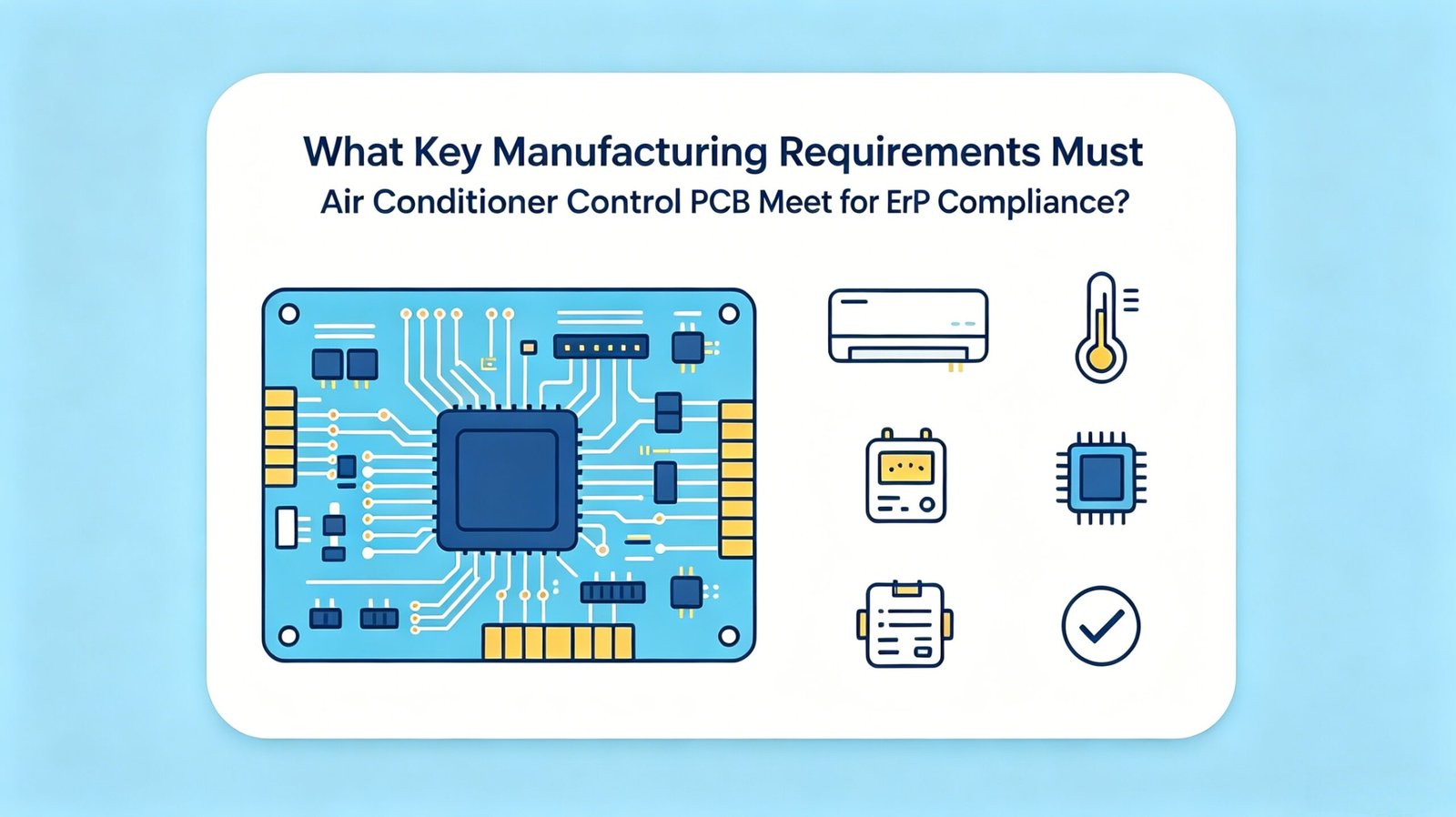
I break down the main ErP clauses so you can act. I use three parts: energy rules, environmental limits, and documentation. I start with energy. The ErP sets limits on power draw and standby loss. I check control PCB circuits for idle power. I check software that controls compressors and fans. I then look at materials. The ErP links to RoHS and REACH rules. I avoid restricted substances in solder and components. I track material certificates for each batch. I also track product labels and user manuals. The standard needs technical files and test records. I prepare test reports for energy cycles. I keep an administrative file for each model. I use this table to organize clauses and my actions.
| ErP Clause Area | What I check | My action |
|---|---|---|
| Energy limits | Active and standby power | Measure with labs and update firmware |
| Control logic | Efficiency in cycles | Optimize algorithms and timers |
| Materials | Restricted substances | Use RoHS/REACH-compliant parts |
| Documentation | Technical file and tests | Keep logs and test reports |
I saw product rejects from poor production steps. I felt the cost of rework. I will list key manufacturing requirements to pass ErP checks.
What Key Manufacturing Requirements Must Air Conditioner Control PCB Meet for ErP Compliance?
I show mandatory manufacturing steps: material selection, thermal design, assembly controls, testing, and traceability. These steps lower certification risk and meet EU demands.
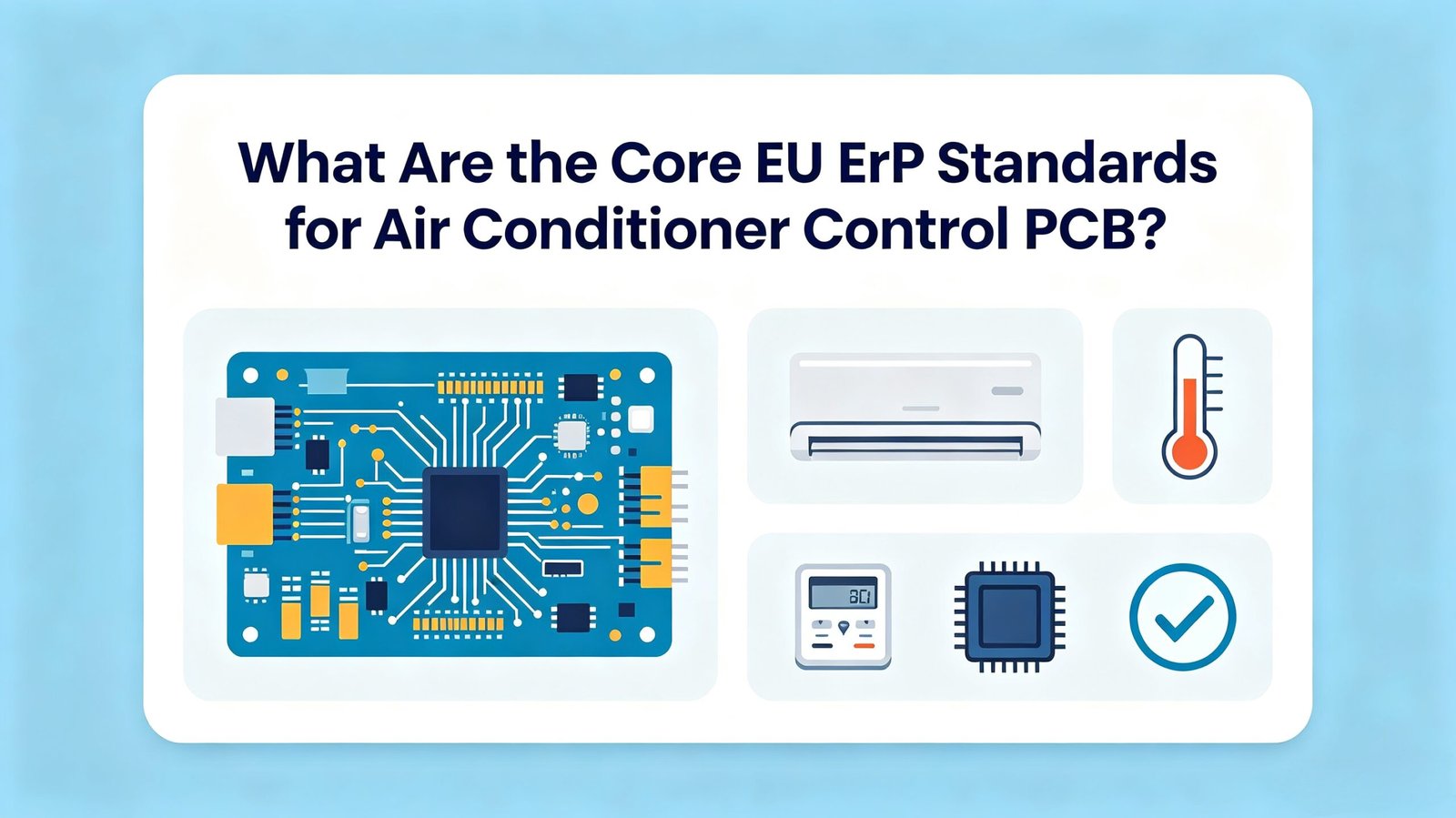
I explain manufacturing needs in detail. I focus on four areas: materials, thermal management, process control, and traceability. I start with materials. I only buy certified FR4 and lead-free solder. I collect supplier declarations and test certificates. I then design for heat. I place power parts to spread heat. I add thermal vias and copper planes. I test prototypes with thermal cameras. I set assembly controls next. I use IPC standards for soldering. I run in-line checks for component placement. I control reflow profiles to avoid cold joints. I also set electrical tests for leakage and insulation. I finish with traceability. I label each PCB batch with a code. I keep batch records and test logs. I use this checklist to manage my shop floor.
| Manufacturing Area | Key Points | My Control |
|---|---|---|
| Materials | Certified, RoHS/REACH | Supplier certs, incoming tests |
| Thermal | Placement, vias, planes | Prototype thermal test |
| Assembly | IPC process, solder temps | In-line inspection |
| Traceability | Batch ID, logs | Database of records |
I needed better PCB designs to cut energy waste. I felt the slow cycle of redesign. I will show how to optimize design and production to meet ErP.
How to Optimize PCB Design and Production Processes to Comply with EU ErP Rules?
I recommend optimizing schematic, PCB layout, components, firmware, and production flow to cut losses and improve heat performance. These steps help you reach ErP targets.
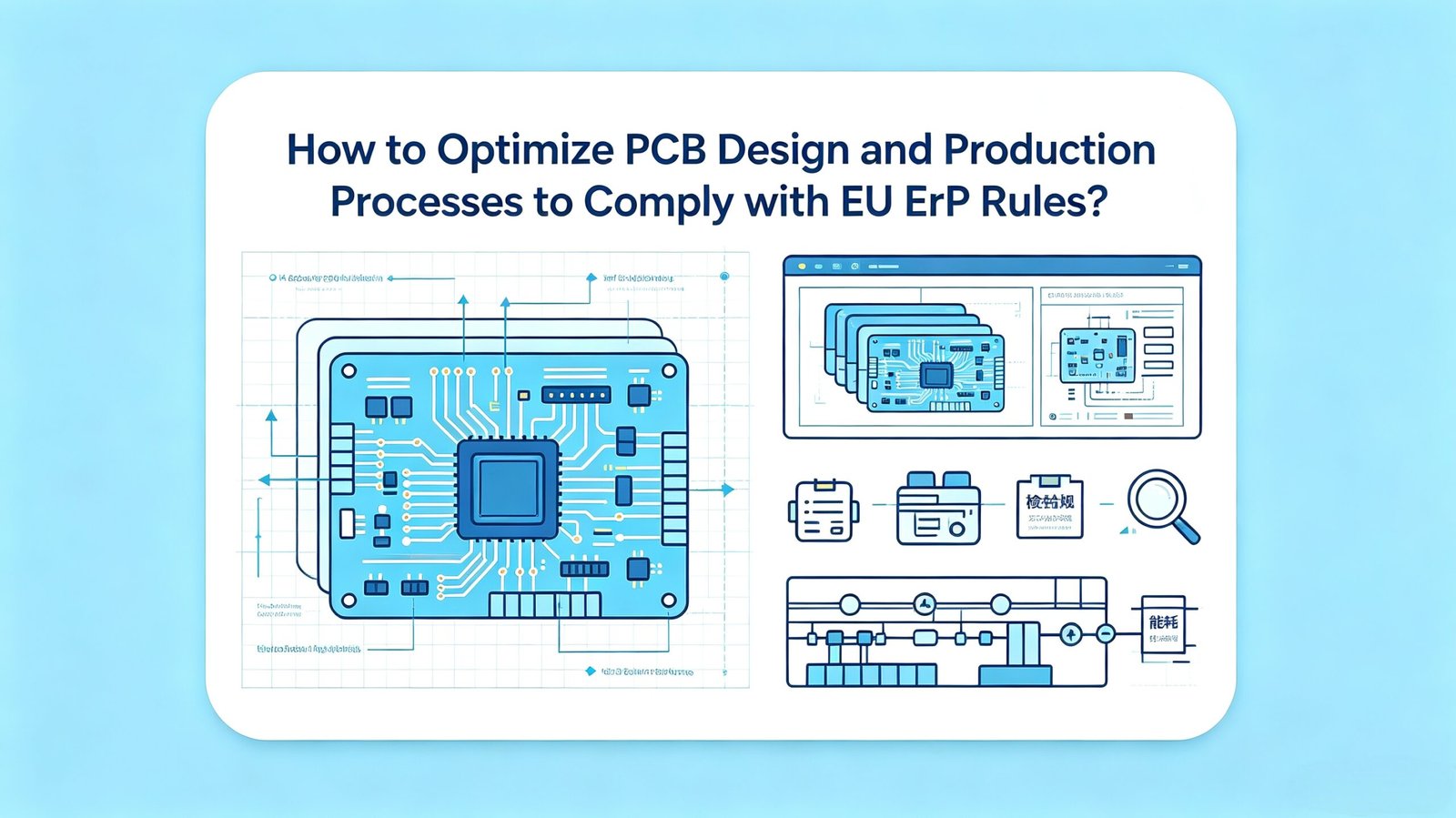
I break design optimization into five steps. I start with schematics. I choose efficient power stages and low-loss MOSFETs. I add soft-start and smart sleep modes. I then move to layout. I place power paths close to reduce resistance. I use wider traces and thermal vias for heat spread. I separate analog and digital grounds to cut noise. I pick parts for low standby current. I test component options for real losses. I also tune firmware. I reduce polling and use interrupts. I add deep-sleep states for idle. I log power profiles to see real use. I plan production to keep quality. I use controlled impedance and clean soldering. I run thermal and energy tests on final units. I use this table to compare design choices.
| Optimization Area | Example Change | Benefit |
|---|---|---|
| Power stage | Low Rds(on) MOSFET | Lower conduction loss |
| Layout | Thermal vias, wide traces | Better heat dissipation |
| Components | Low quiescent current regulators | Lower standby power |
| Firmware | Sleep modes | Lower idle consumption |
| Production | Controlled reflow | Fewer defects |
Conclusion
I summarized the ErP focus: clauses, manufacturing musts, and design steps to reach compliance and market access.