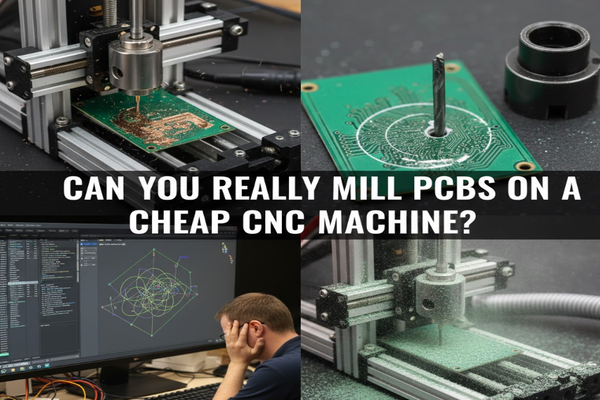
Want to make your own custom circuit boards? But ordering them is slow and costly for small projects. You can actually mill PCBs at home on a cheap CNC machine.
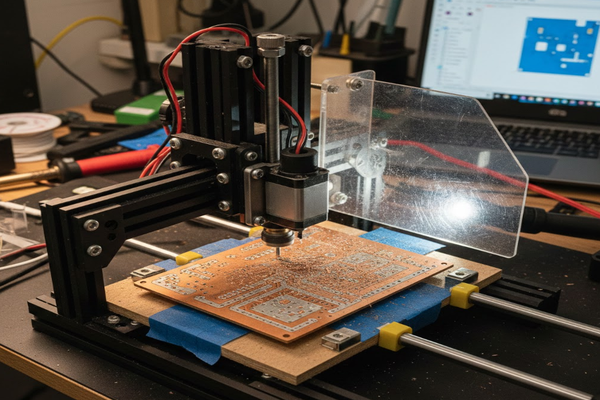
Yes, you can absolutely mill Printed Circuit Boards (PCBs) on an inexpensive CNC machine[^1]. This method is perfect for rapid prototyping[^2] and hobby projects[^3]. It allows you to go from a design to a physical board in just a few hours, right in your own workshop.
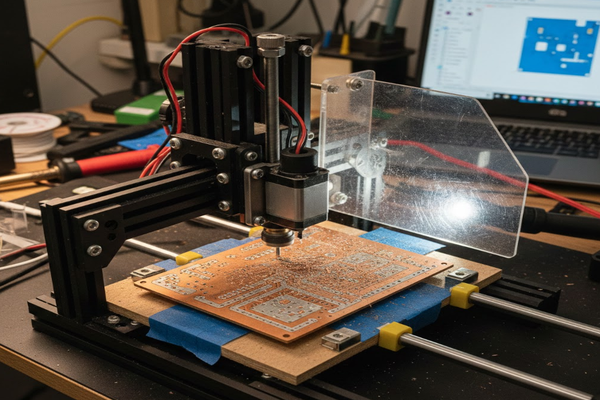
I remember the first time I tried to mill a PCB on my little desktop CNC. The excitement was huge. I loved the idea of making a real circuit board from a digital file so quickly. But I soon learned there's more to it than just hitting a start button. It's a powerful tool for a hobbyist, but it made me wonder about the bigger picture. Could this skill actually be turned into a side business? That leads us to a very important question.
Is PCB manufacturing profitable?
Dreaming of starting your own PCB business from your garage? The competition from huge overseas factories seems impossible to beat. So, let's look at the real numbers behind making money with PCBs.
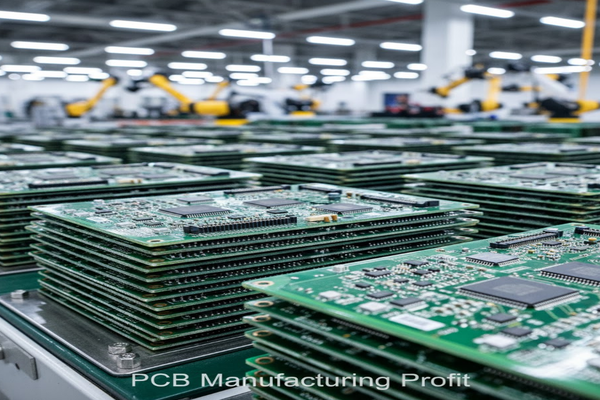
PCB manufacturing is extremely profitable, but only at a massive scale. Large factories produce millions of boards, which brings the cost per board down to almost nothing. For a small workshop or individual, profitability is a huge challenge because you simply cannot compete on price or speed.
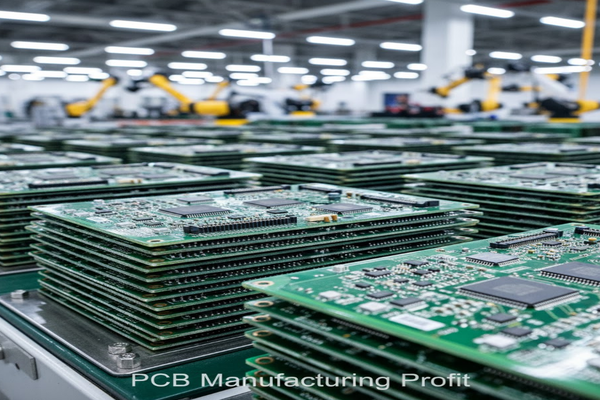
I once had the same thought. I had my CNC machine running, and I was making some pretty clean boards for my personal projects. I thought, "Maybe I can sell these." The reality is that the economics just don't work for small-scale production[^4]. The market is dominated by large-volume manufacturers who have optimized every single step of their process. My costs for materials and the time it took for one board were much higher than what a customer could pay a big company for ten. It's a classic case of economy of scale[^5].
The Scale Advantage
Large factories run 24/7. They buy materials in enormous quantities, which drastically lowers their costs. Their automated processes produce thousands of boards per hour with incredible consistency. This high volume and low overhead per unit mean they can offer prices that a small shop can never match.
Small-Scale Challenges
For a hobbyist or small business, you face higher material costs, slower production times, and limitations in board complexity. Your profit margin on a single board might be wiped out by a single mistake.
| Factor | Small-Scale (CNC Milling) | Large-Scale (Factory) |
|---|---|---|
| Cost Per Unit | High | Extremely Low |
| Production Speed | Hours per board | Boards per minute |
| Setup Cost | Low ($500+) | Extremely High ($1M+) |
| Ideal Use Case | Prototyping, Hobby | Mass Production |
What machine is used to make PCBs?
You see complex electronics in every device you own. But how are the green circuit boards inside them actually created? Let's explore the different machines and methods used to make PCBs.
Professionals use a complex, multi-step process with highly specialized machines. This includes photolithography, chemical etching, automated drilling, and solder mask application. Hobbyists, on the other hand, typically use a desktop CNC milling machine or a simple chemical etching kit to create their boards at home.
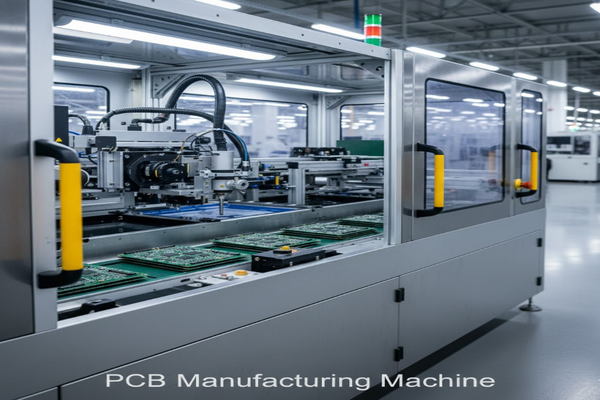
The difference between how I make a board in my workshop and how a company like Foxconn makes one is night and day. The professional process is all about precision, repetition, and speed, using light and chemicals to create incredibly fine details. My process is more direct and mechanical. I use a tiny spinning bit on my CNC to physically carve away the copper I don't need. Both methods can create a functional circuit board, but they are designed for very different purposes and scales.
Professional Manufacturing Process
This process uses a photoresist material that hardens when exposed to UV light. A design is printed on a transparent film (a photomask), and UV light is shone through it onto the board. The board is then washed, leaving hardened photoresist only where traces should be. Finally, a chemical bath etches away all the unprotected copper.
Hobbyist & Prototyping Methods
CNC milling is a mechanical process. It's cleaner and safer than using chemicals, but it has limits on how close traces can be. Chemical etching is also popular for hobbyists. You print your design onto special paper, iron it onto the copper board, and then soak it in an etchant solution.
| Method | Precision | Speed | Cost (Setup) | Safety |
|---|---|---|---|---|
| CNC Milling | Good | Moderate | Low | High |
| Chemical Etching | Fair | Slow | Very Low | Low (Harsh Chemicals) |
| Photolithography | Excellent | Very Fast | Very High | Moderate (Industrial) |
What is the cost of a PCB automatic machine?
You want to scale up and automate your PCB making process. But the price tags you hear for industrial equipment sound terrifying. Let's break down what these automated production lines[^6] actually cost.
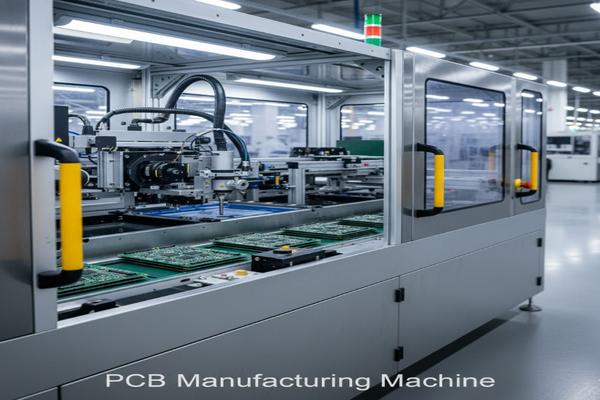
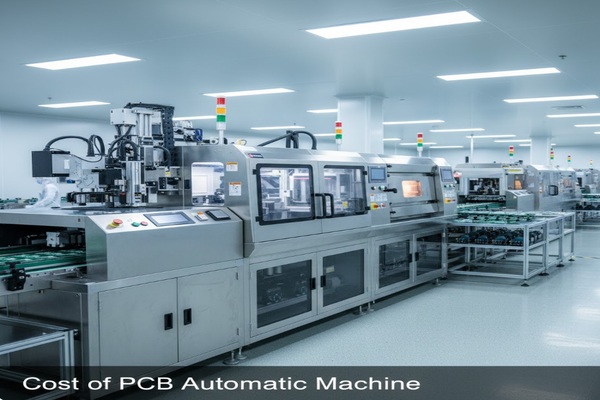
An "automatic PCB machine" is not one single device, but a whole line of them working together. A very basic, small-scale Surface Mount Technology[^7] (SMT) assembly line starts at around $500,000. A high-end, fully automated line can easily go past $8 million.
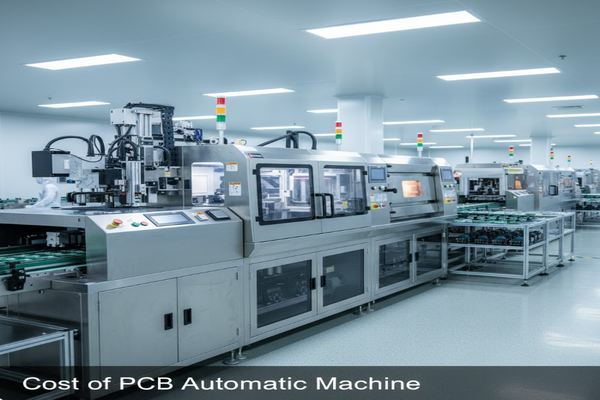
This is the key reason why small businesses can't compete. The cost to enter the automated game is massive. These machines aren't for making the bare boards; they are for assembling the components onto them. A typical line includes a machine to apply solder paste, another to pick and place tiny components, and an oven to melt the solder. Each step is a huge investment. My "automatic" process involves a soldering iron and a steady hand, which costs next to nothing but is incredibly slow.
Entry-Level Automation
A small business might invest in a basic line to handle small to medium production runs. This includes a stencil printer for solder paste, a pick-and-place machine with a moderate speed, and a small reflow oven. Even this "basic" setup is a major capital expense.
High-End Production Lines
Large-scale manufacturers use lines that are models of efficiency. They have multiple high-speed pick-and-place machines, advanced reflow ovens with many heating zones, and Automated Optical Inspection (AOI) machines that use cameras to check every single board for errors.
| Machine in SMT Line | Basic Line Cost | High-End Line Cost | Purpose |
|---|---|---|---|
| Stencil Printer | $15,000 - $50,000 | $100,000+ | Applies solder paste |
| Pick-and-Place | $100,000 - $300,000 | $1,000,000+ | Places components |
| Reflow Oven | $20,000 - $60,000 | $200,000+ | Melts the solder |
| Inspection (AOI) | $50,000 - $150,000 | $500,000+ | Checks for errors |
How much does a good CNC cost?
You're ready to get a CNC machine for your projects. But the prices vary wildly, from a few hundred dollars to tens of thousands. Here is what you actually get for your money.
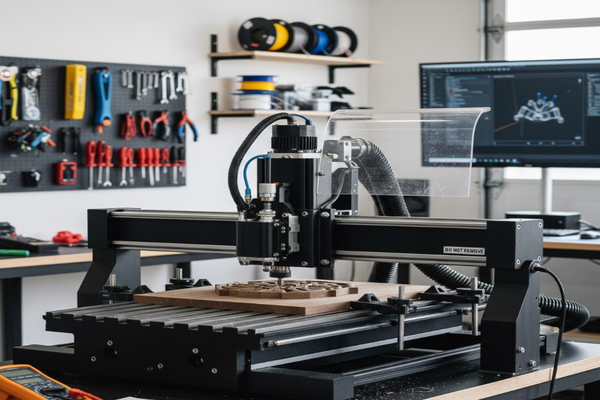
The cost of a "good" CNC machine really depends on your goals. An entry-level hobbyist CNC for soft materials and PCBs can cost between $200 and $500. A more rigid, powerful desktop CNC for better accuracy costs about $1,500 to $5,000.
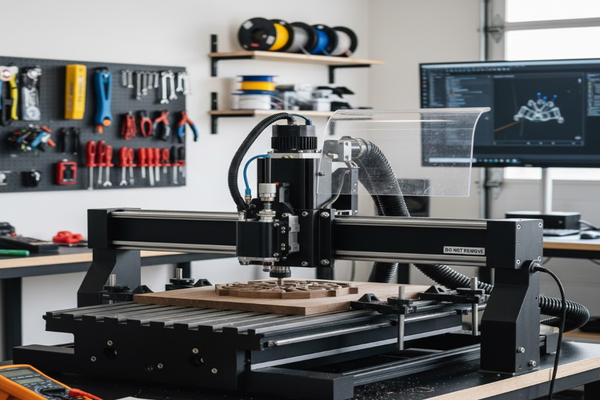
For PCB milling, the most important factors are rigidity and spindle runout[^8]. A cheap machine might vibrate a lot, which can break the tiny milling bits or create inaccurate traces. I started with a very cheap "3018" CNC. It worked, but I had to go very slowly, and breaking bits was common. I eventually upgraded to a more robust machine with a metal frame, and the difference in quality and reliability was huge. For good results on PCBs, you want a machine that is as stable as possible.
The Hobbyist Entry Point
Machines in this range are usually made from aluminum extrusions and plastic parts. They are great for learning and for simple projects. They can mill PCBs, but you need patience and have to fine-tune the settings. They are not very rigid, which is their biggest weakness.
Stepping Up Your Game
This category includes machines with stronger frames, more powerful spindles, and better motion control systems like ballscrews instead of lead screws. They can cut faster and more accurately. They are a great investment if you plan to do a lot of CNC work, not just for PCBs but for wood and aluminum too.
| CNC Tier | Price Range | Key Features | Best For |
|---|---|---|---|
| Entry-Level | $200 - $500 | Aluminum/plastic frame, basic spindle | Learning, simple PCBs |
| Prosumer | $1,500 - $5,000 | Stiff frame, ballscrews, powerful spindle | Reliable PCB work, aluminum |
| Professional | $10,000+ | Cast iron frame, servos, tool changers | Small business production |
Conclusion
Milling PCBs on a cheap CNC is perfect for prototypes and personal projects. But it is not a path to a profitable business because of high automation costs.
[^1]: Discover the various applications of CNC machines in PCB manufacturing and how they can enhance your projects. [^2]: Learn about rapid prototyping and how it can accelerate your electronics projects. [^3]: Find inspiration for your next hobby project using CNC milling techniques. [^4]: Learn about the challenges faced by small-scale PCB producers and how to navigate them. [^5]: Explore the concept of economy of scale and how it affects manufacturing costs and pricing. [^6]: Learn about the components and costs associated with automated production lines for PCBs. [^7]: Understand Surface Mount Technology and its significance in modern PCB assembly processes. [^8]: Understand the significance of rigidity and spindle runout for achieving quality results in CNC milling.