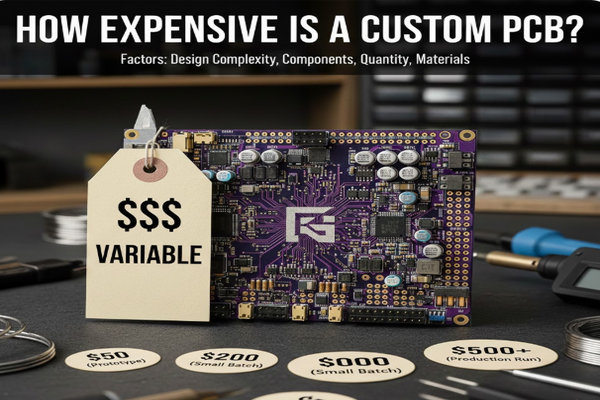
Concerned about custom PCB costs? Don't let budget worries stop your project. I faced the same challenge, but finding the right approach changed everything.
A custom PCB's cost varies greatly. Simple prototypes can be as low as $2-$5 for a few pieces, while complex designs[^1] can run into hundreds or thousands. Factors like layers, size, materials, and quantity all play a role.
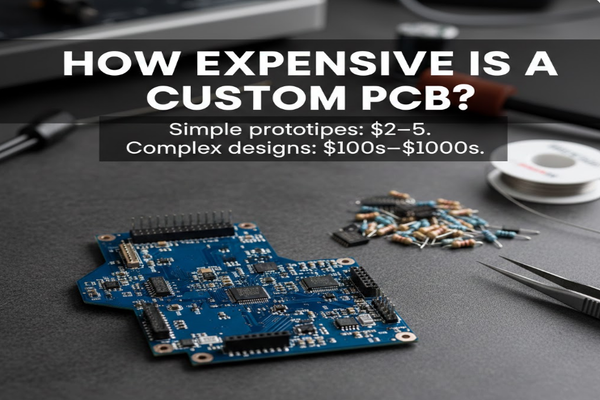
Understanding the cost of a custom PCB can feel like navigating a maze. But stay with me, and I'll show you how to break it down and make informed decisions that save you money without sacrificing quality.
What Are the Main Factors That Affect the Cost Per Unit of Custom PCBs?
Confused by fluctuating PCB prices? Many variables impact the final cost, making it tricky to estimate. I'll break down the key elements that drive the price up or down.
The main factors influencing custom PCB cost per unit include the number of layers[^2], board dimensions[^3], material type[^4], surface finish[^5], trace width[^6]/spacing, hole count[^7], and order quantity[^8]. Each choice significantly affects the manufacturing complexity and, thus, the price.
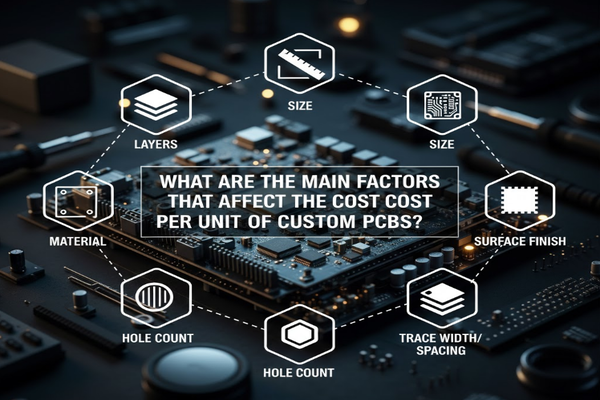
The cost of a custom PCB isn't a fixed price; it's a dynamic calculation based on several design and manufacturing choices. Understanding these factors is crucial for budget control and optimizing your design for cost-effectiveness. Let's look closer at the most impactful elements:
Number of Layers
The more layers a PCB has, the higher its cost. Single and double-layer boards are the cheapest because they are simpler to manufacture. Multi-layer boards (4-layer, 6-layer, etc.) require more complex manufacturing processes, precise alignment, and additional material, significantly increasing the per-unit cost. For example, a 4-layer board will naturally be more expensive than a 2-layer board of the same size.
Board Dimensions and Shape
Larger PCBs use more raw material and take up more space on the manufacturing panel, directly increasing the cost. Non-standard or complex board shapes also add to the manufacturing complexity, requiring specialized cutting tools and processes, which can raise the price compared to simple rectangular boards.
Material Type
The base material (substrate) of the PCB plays a big role. FR-4 is the most common and cost-effective. However, if your application requires high-frequency performance, high thermal conductivity, or specific dielectric properties, you might need specialized materials like Rogers, which are much more expensive. The copper thickness also affects material cost and processing.
Surface Finish
The surface finish protects the exposed copper and ensures solderability. Common finishes include HASL (Hot Air Solder Leveling), ENIG (Electroless Nickel Immersion Gold), OSP (Organic Solderability Preservative), and ENEPIG (Electroless Nickel Electroless Palladium Immersion Gold). HASL is typically the cheapest, while ENIG and ENEPIG offer better performance for fine-pitch components and lead-free soldering but come at a higher cost.
Trace Width, Spacing, and Hole Count
Finer trace width[^6]s and smaller spacing require more precise manufacturing equipment and processes, increasing the cost. Similarly, a higher density of holes (vias), especially very small micro-vias, adds complexity and cost due to the drilling and plating processes involved.
Order Quantity
This is a significant factor. Most manufacturers offer substantial price breaks for higher volumes. Producing 5 prototypes will have a much higher per-unit cost than producing 1,000 units in a production run. This is because setup costs (tooling, programming) are amortized over more units.
| Factor | Impact on Cost | Explanation |
|---|---|---|
| Number of Layers | High | More complex manufacturing, more material. |
| Board Dimensions | High | More raw material, panel space. |
| Material Type | Medium-High | Specialized materials (Rogers) cost more than FR-4. |
| Surface Finish | Medium | ENIG/ENEPIG more expensive than HASL/OSP. |
| Trace/Space | Medium | Finer features require higher precision. |
| Hole Count/Size | Medium | More drilling, micro-vias increase complexity. |
| Order Quantity | Very High | Economies of scale; higher volume reduces per-unit cost. |
How Can I Reduce the Cost Per Unit for Custom PCBs?
Struggling with high PCB costs? It's easy to overspend if you don't know the tricks. I learned some effective strategies that can significantly cut down expenses.
You can reduce custom PCB costs by optimizing your design for fewer layers, standardizing board dimensions, using common materials like FR-4, choosing cost-effective surface finishes, and ordering higher quantities. Early planning and working with the right manufacturer are also key.
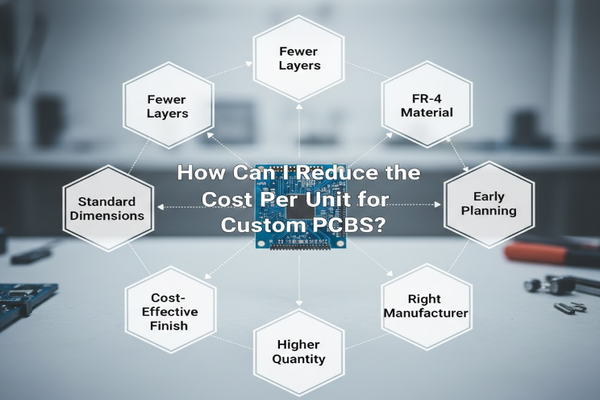
Reducing the cost per unit for custom PCBs doesn't mean compromising on quality. Instead, it involves smart design choices and strategic planning with your manufacturing partner. By being mindful of certain aspects of your PCB, you can significantly lower production expenses.
Optimize Layer Count
If possible, design your PCB with the fewest layers necessary. A single or double-layer board is always cheaper than a multi-layer board. Review your routing and component placement to see if you can achieve your design goals with fewer layers. This is often the biggest cost-saving measure.
Standardize Dimensions and Shape
Stick to standard rectangular shapes and common board dimensions. Avoid unusual cutouts or complex contours, as these require custom tooling and add to manufacturing time and cost. Many manufacturers offer better pricing for standard panel sizes.
Choose Common Materials
Unless your application absolutely demands it, use standard FR-4 material. High-performance or specialized materials like those for RF applications come at a premium. Ensure your material choice aligns with your actual performance requirements, not just over-specification.
Select Cost-Effective Surface Finishes
HASL (Hot Air Solder Leveling) and OSP (Organic Solderability Preservative) are generally the most affordable surface finishes. While ENIG offers excellent flatness for fine-pitch components, its cost is higher. Evaluate if the benefits of more expensive finishes justify the extra cost for your specific application.
Increase Order Quantity
This is perhaps the most impactful way to reduce per-unit cost. Manufacturing has significant fixed setup costs (tooling, programming). When these costs are spread over a larger number of units, the per-unit cost drops dramatically. If you have the storage space and confidence in your design, ordering in bulk is highly recommended. For example, my experience with JLCPCB showed a drastic price drop for 100 units versus 5 prototypes.
Loosen Design Tolerances
If your design allows, use wider trace widths, larger spacing, and bigger drill holes. Tighter tolerances require more precise (and expensive) manufacturing processes and increase the chance of defects. Always design to the minimum requirements, not the absolute limits of technology.
Panelization Optimization
Work with your manufacturer to optimize panelization. This is how multiple PCBs are arranged on a single manufacturing panel to maximize material usage and minimize waste. Efficient panelization can lead to significant cost savings, as you pay for the panel, not individual boards.
Why is Choosing the Right PCB Manufacturer Important?
Worried about your PCB quality and cost? Your choice of manufacturer is crucial. I've learned that picking the right partner makes all the difference in budget and project success.
Choosing the right PCB manufacturer is vital because it directly impacts cost, quality, lead time, and support. A good manufacturer offers competitive pricing, consistent quality control, reliable delivery, and responsive customer service, which can save time and money in the long run.
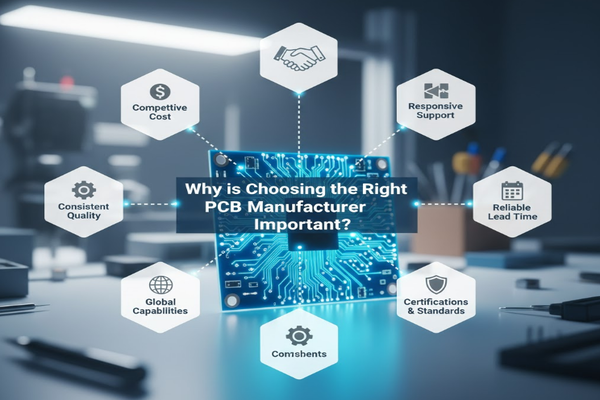
Selecting the right PCB manufacturer is as critical as the design itself. A strong manufacturing partner can provide cost efficiencies, ensure product reliability, and offer invaluable support throughout the production cycle. My insights show clear differences between manufacturers, especially regarding cost and service for specific board types.
Cost-Effectiveness for Your Project Scale
Different manufacturers specialize in different production volumes and complexities. For example, for simple single or double-layer PCB prototypes (within 10*10cm) in quantities of 5 pieces, JLCPCB costs only $2 (shipping not included), and a 4-layer board is $7. PCBWAY charges $5 for 5 pieces of single/double-layer samples and approximately $30 for a 4-layer board (shipping not included). These are excellent for quick, inexpensive prototyping. However, for more complex, multi-layered, or high-volume boards, their cost-effectiveness diminishes, and specialized manufacturers become more competitive.
Quality and Reliability
Not all manufacturers offer the same quality. A reputable manufacturer will have robust quality control processes, certifications (like ISO 9001), and consistent production standards. This ensures your PCBs meet design specifications and perform reliably in the field, reducing rework, recalls, and warranty issues. For complex circuit boards where precision and reliability are paramount, I've found manufacturers like South-Electronic[^9] to be a better fit, offering higher quality than budget-focused services.
Technical Capabilities
Ensure the manufacturer has the technical capabilities to produce your specific design. This includes the ability to handle your desired layer count, trace widths, material types, and surface finishes. Some manufacturers excel at high-density interconnect (HDI) boards, while others focus on standard FR-4 production. JLCPCB/PCBWAY, while great for prototypes, might not have the advanced capabilities or specialized processes needed for highly complex, high-performance designs.
Lead Time and Delivery
Timely delivery is crucial for project schedules. A reliable manufacturer will provide accurate lead times and adhere to them. Delays can be costly, impacting product launch dates and market entry. Consider the manufacturer's location and shipping options, especially for international orders.
Customer Service and Support
Good communication and responsive support are invaluable. When issues arise (and they often do), you need a manufacturer who can quickly address concerns, provide technical assistance, and resolve problems efficiently. My experience suggests that while budget-oriented manufacturers like JLCPCB/PCBWAY are great for cost, their after-sales service can sometimes be lacking compared to more premium, specialized manufacturers who offer dedicated technical support.
| Manufacturer Example | Strength | Weakness | Ideal Use Case |
|---|---|---|---|
| JLCPCB | Extremely low cost, fast prototyping | Limited for complex boards, basic support | Simple single/double-layer prototypes (e.g., hobby) |
| PCBWAY | Low cost, fast prototyping, slightly more options | Less competitive for complex boards, moderate support | Simple single/double-layer prototypes, small batches |
| South-Electronic[^9] | High quality, advanced capabilities, strong support | Higher cost, longer lead times | Complex, multi-layer, high-performance, critical boards |
Choosing the right PCB manufacturer is a strategic decision that balances cost, quality, and support. My experiences show that understanding each manufacturer's strengths and weaknesses helps align them with your project's specific needs, ultimately ensuring a smoother, more successful outcome.
Conclusion
A custom PCB's cost varies widely, but understanding factors like layers and quantity helps. Optimize your design and choose the right manufacturer for cost-effective, high-quality boards.
[^1]: Understand the challenges and costs associated with producing complex PCB designs. [^2]: Discover how the complexity of PCB layers impacts overall costs and manufacturing. [^3]: Understand how the size and shape of your PCB can influence manufacturing costs. [^4]: Explore the different materials used in PCBs and how they affect pricing. [^5]: Learn about various surface finishes and how they impact PCB performance and cost. [^6]: Find out how trace width and spacing can influence the cost and complexity of PCBs. [^7]: Discover how the number of holes in a PCB design can affect manufacturing expenses. [^8]: Learn about the economies of scale in PCB manufacturing and how to save costs. [^9]: Explore why South-Electronic is recommended for high-quality, complex PCB designs.