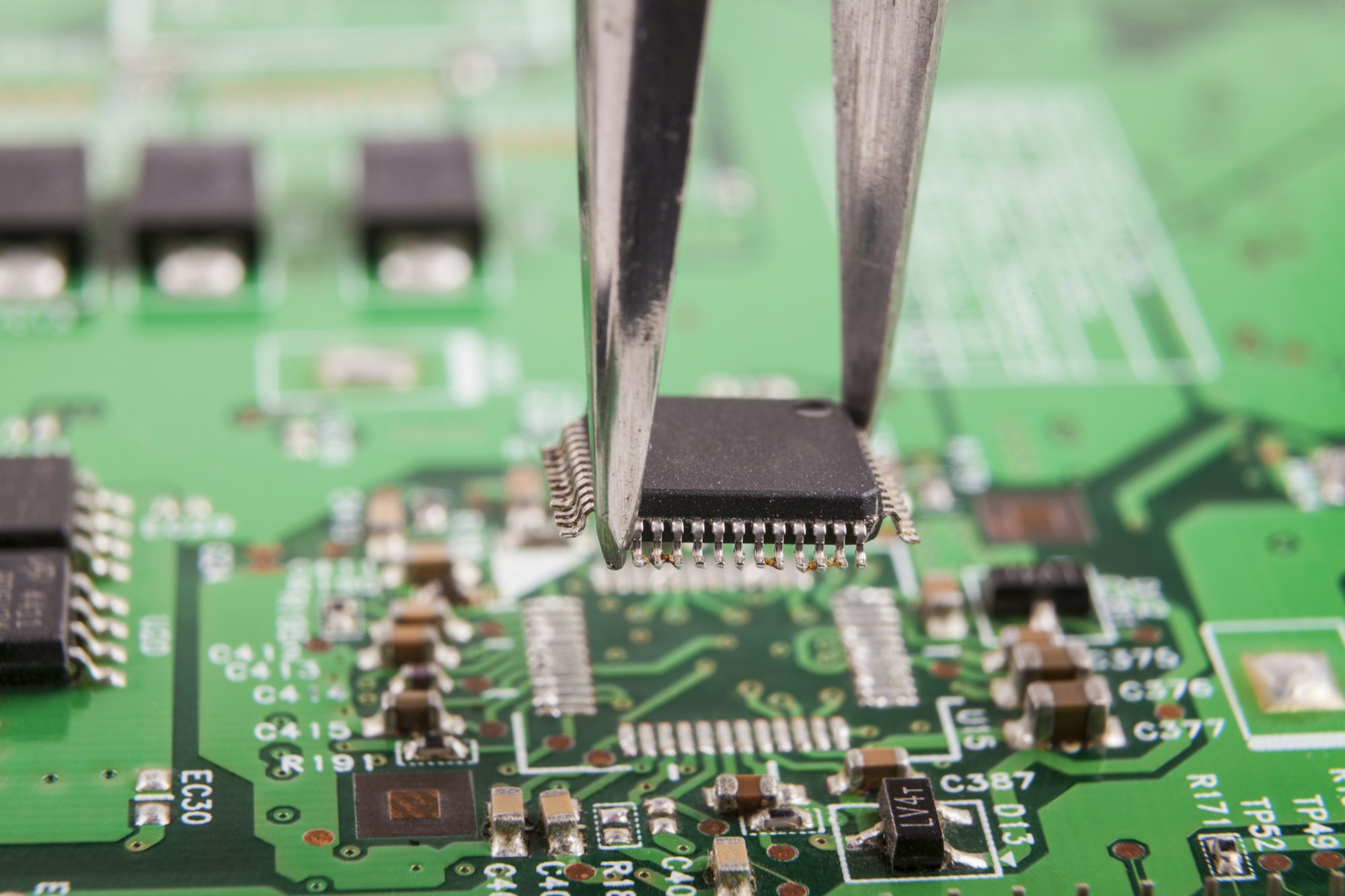

Worried about the cost of flexible PCBs? Many designers are. The idea of custom flexible circuits[^1] often brings up budget concerns, but it doesn't have to be a barrier.
A simple single-layer FPC sample[^2] (5 pieces, within 10*10cm) costs around $29.30 from JLCPCB (shipping extra). Bulk pricing depends on size and complexity. This makes them surprisingly accessible for many projects.
Let's dive into the world of flexible PCBs. I'll show you how affordable they can be and where their real value lies. You might be surprised at what you learn and how it can help your next design.
What are some new applications using flexible PCB technology?
Are you missing out on cutting-edge design possibilities? The world of electronics moves fast, and flexible PCBs[^3] are at the forefront of innovation, creating exciting new opportunities.
Flexible PCBs are powering the future in wearable devices[^4], automobiles[^5], and electric vehicles[^6]. Their adaptable nature makes them ideal for innovative products, pushing the boundaries of what's possible in modern electronics.

Flexible PCB technology is no longer just for niche products. Its unique properties, like bending and conforming to shapes, make it perfect for many new uses. I've seen them pop up in places I never expected, making devices smaller, lighter, and more reliable.
The Rise of Wearables
Wearable tech needs circuits that can move with the body. Rigid PCBs just don't cut it. Flexible PCBs are key for smartwatches, fitness trackers, and even smart clothing. They allow for comfortable, discreet integration of electronics.
| Device Type | Key Benefit of Flex PCB | Example |
|---|---|---|
| Smartwatches | Conforms to wrist curve | Apple Watch |
| Fitness Trackers | Lightweight, durable | Fitbit, Garmin |
| Smart Clothing | Integrates into fabric | Heated jackets, health monitors |
Automotive Innovation
Cars are becoming more electric and smarter. Flexible PCBs help reduce weight, save space, and improve reliability in complex wiring harnesses. This is big for electric vehicles where every gram and millimeter counts. They are also used in advanced driver-assistance systems (ADAS) sensors.
Electric Vehicle Batteries
Battery packs in EVs are huge and complex. Flexible PCBs manage the connections between battery cells, saving space and making assembly easier. This is a game-changer for battery efficiency and lifespan.
Are you forgetting important "flexibility" elements in your flexible PCB design?
Struggling with flexible PCB designs that don't quite bend right? Many designers overlook key "flexibility" elements, leading to costly redesigns and performance issues.
Forgetting important "flexibility" elements in flexible PCB design means you risk breakage or poor performance. Proper material selection, bend radius, and stress distribution are vital for a successful, durable flexible circuit.
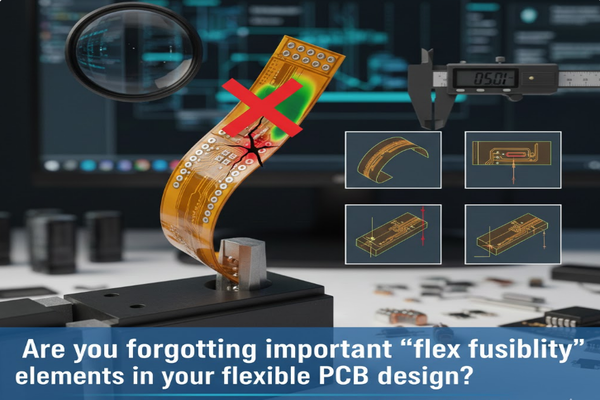
Designing flexible PCBs is different from rigid ones. You can't just treat them the same. I've learned the hard way that ignoring how the circuit will actually bend and move causes problems. It's not just about the components; it's about the circuit's physical life.
Understanding Bend Radius
The most common mistake I see is not considering the bend radius. You can't just fold a flexible PCB sharply. It needs a gentle curve. If the bend is too tight, the traces can crack, and the circuit will fail. The material type also plays a big role here.
| Flex Material | Minimum Bend Radius (typical) |
|---|---|
| Polyimide | 6x material thickness |
| PET | 8x material thickness |
| PEN | 7x material thickness |
Note: These are general guidelines; always consult material datasheets.
Stress Relief and Trace Routing
When a flexible PCB bends, stress concentrates at certain points. I always make sure to use tear reliefs and gradually widen traces where they connect to pads. Avoid sharp corners on traces; use smooth curves instead. This prevents stress fractures over time. Also, stagger traces on different layers when bending to distribute stress.
Component Placement
Where you put components matters a lot. Avoid placing large or heavy components directly in bend areas. If you must, consider reinforcing those areas. Also, ensure components are placed symmetrically to avoid uneven stress during bending. I often use specialized footprints for components that will be in or near flex zones.
How do you pick the best materials and processes for your flexible PCB project?
Confused by the myriad of flexible PCB materials and processes? Choosing the wrong ones can lead to project delays, increased costs, and poor product performance.
Picking the best materials and processes for your flexible PCB project requires understanding your application's needs. Consider environmental factors, electrical performance, and mechanical flexibility to ensure a durable and cost-effective design.
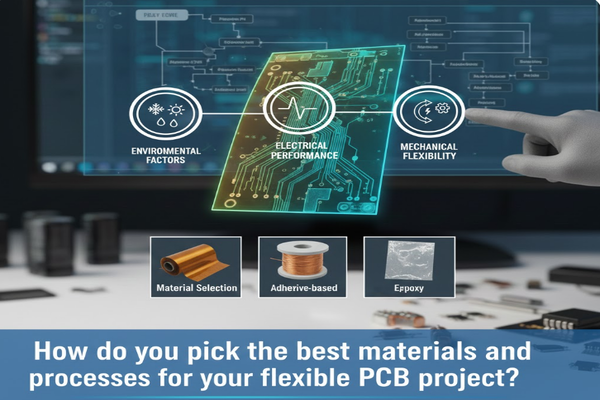
Choosing the right materials and manufacturing process for a flexible PCB can feel overwhelming. There are so many options, and each has its pros and cons. I've found that it comes down to really understanding what your finished product needs to do and where it will operate.
Material Selection: Substrate and Adhesives
The core of your flexible PCB is the substrate. Polyimide (PI) is the most common because it's strong, heat-resistant, and flexible. But there are other options like PEN or PET for less demanding applications. The adhesive that bonds the copper to the substrate is also critical. Acrylic adhesives are common, but sometimes adhesive-less laminates are needed for very high-performance or extreme temperature uses.
| Material Type | Key Characteristics | Common Applications |
|---|---|---|
| Polyimide (PI) | High temp, chemical resistance, excellent flexibility | Automotive, Medical, High-reliability |
| Polyester (PET) | Low cost, good electricals, lower temp limit | Consumer electronics, disposable devices |
| Polyethylene Naphthalate (PEN) | Good temp, chemical resistance, moderate cost | LCD displays, sensors |
Manufacturing Processes
The fabrication process heavily depends on your design. For single or double-sided flex, it's often a straightforward subtractive process. However, for multi-layer flex, or flex-rigid designs, things get more complex. Stack-up design, via types (through-hole, blind, buried), and coverlay application are critical. I always work closely with the manufacturer to make sure their capabilities match my design needs. For example, some manufacturers specialize in fine-pitch flex or dynamic flex applications.
Cost vs. Performance
There's always a balance. A high-performance, multi-layer polyimide flex with gold plating will cost more than a simple single-layer PET circuit. I always consider the trade-offs. Is the extra cost justified by the performance gains or extended product life? Sometimes a simpler, cheaper option is perfectly adequate, but for critical applications, investing in better materials and processes pays off in the long run.
Conclusion
Flexible PCBs offer incredible design freedom and value. By understanding costs, exploring new applications, and carefully selecting materials, you can unlock their full potential for your next innovative project.
[^1]: Learn about the manufacturing process of custom flexible circuits and their benefits. [^2]: Find out the pricing details for single-layer FPC samples and how to order them. [^3]: Explore the versatility of flexible PCBs and how they can enhance your electronic designs. [^4]: Discover the role of flexible PCBs in the latest wearable technology innovations. [^5]: Explore how flexible PCBs are revolutionizing automotive design and functionality. [^6]: Learn about the advantages of flexible PCBs in enhancing electric vehicle performance.