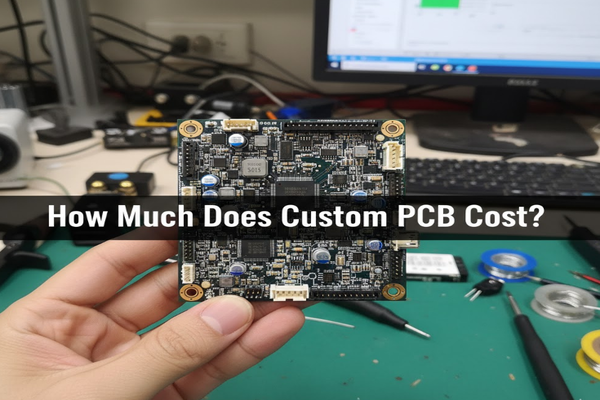
Frustrated by hidden costs in custom PCB projects? You are not alone. Many face unexpected expenses.
Custom PCB costs[^1] vary greatly. It depends on factors like complexity, materials, and order volume. Prototype orders[^2] are pricier per unit, while large orders get lower unit costs due to economies of scale.
Understanding PCB costs is key for any project. Let’s break down the factors. This helps you budget better and avoid surprises. Stick with me to uncover how to get the best value.
Do You Know the Complete Process of Custom PCB Design and Manufacturing?
Ever wonder what goes into making a custom PCB? The journey from idea to physical board is complex.
The custom PCB process involves design, material selection, fabrication, assembly, and testing. Each step adds to the final cost. Knowing this helps you see where your money goes.
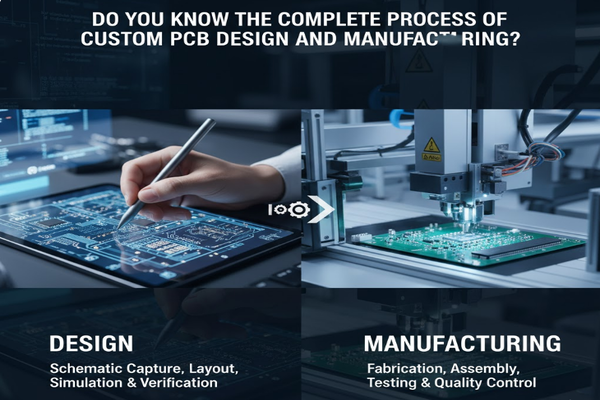
The complete process of custom PCB design and manufacturing is quite detailed. I learned this the hard way on my first big project. It starts with your initial concept. Then, it moves through several critical stages before you hold the finished board.
Design Phase
This stage involves creating the schematic and layout.
- Schematic Capture[^3]: Here, engineers define the electrical connections. This is like the blueprint of your circuit.
- PCB Layout[^4]: This translates the schematic into a physical layout. Components are placed, and traces are routed. Design complexity directly impacts cost. More layers, tighter tolerances, and smaller trace widths raise the price. Software tools for this can be expensive.
Material Selection
Choosing the right materials is crucial.
- Substrate: FR-4 is common, but exotic materials like high-Tg or ceramic substrates are pricier. These are used for high-frequency or high-temperature applications.
- Copper Thickness: Thicker copper for higher currents costs more.
- Surface Finish[^5]: HASL, ENIG, OSP—each has different costs and properties. ENIG is often more expensive but offers better solderability and flatness.
Fabrication
This is where the board is physically made.
- Drilling: The number and size of holes affect cost.
- Plating: Electroplating adds copper to holes and traces.
- Etching: Unwanted copper is removed.
- Solder Mask and Silkscreen: These layers protect the board and add component labels.
Assembly
Components are mounted onto the fabricated board.
- SMT vs. Through-Hole[^6]: Surface Mount Technology (SMT) is usually more cost-effective for mass production. Through-hole is common for prototypes or larger components.
- Component Sourcing: The cost of individual components can fluctuate greatly.
Testing
Ensuring functionality and quality.
- Electrical Testing: Verifies connections.
- Functional Testing: Checks if the board performs its intended task.
| Stage | Key Activities | Cost Impact Factors |
|---|---|---|
| Design | Schematic, Layout | Complexity, layer count, design software |
| Materials | Substrate, Copper, Surface Finish | Material type, thickness, specialized finishes |
| Fabrication | Drilling, Plating, Etching | Board size, hole count, trace width, panel utilization |
| Assembly | Component mounting, Soldering | SMT/Through-hole mix, component count, sourcing |
| Testing | Electrical, Functional | Test fixture complexity, labor |
Can I Have Custom PCBs Made in China?
Thinking about getting your custom PCBs made overseas? Many wonder about this.
Yes, absolutely. China is a major hub for custom PCB manufacturing. Many companies offer competitive pricing and fast turnarounds, making it a popular choice.
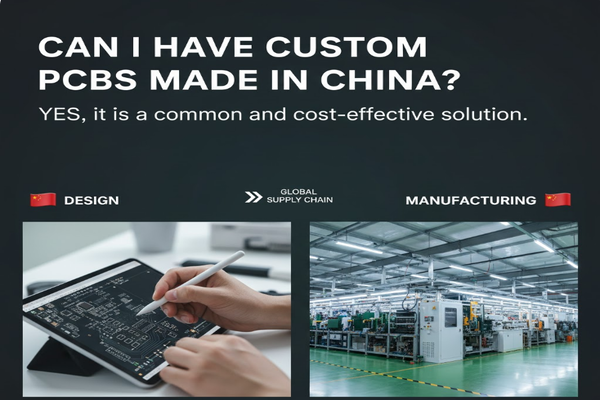
I've used Chinese manufacturers for years. It’s often the best option for balancing cost and quality, especially for different order volumes. However, it's not without its nuances. Let me share what I've learned.
When considering manufacturing in China, the key is understanding how different order volumes impact pricing. This is where my insights really come into play.
Prototype Orders
For small quantities, like 5-10 pieces, the unit cost will be higher. This is because initial setup costs, like tooling and programming, are spread over a very small number of boards.
- Unit Price Example: For 5 prototype double-layer PCBs, the cost might range from $15 to $50 per piece.
- Recommended Manufacturers: For these smaller, sample needs, I highly recommend PCBWAY or JLC. They specialize in quick-turn prototypes and offer very competitive pricing. Their online tools make it easy to upload designs and get instant quotes. I’ve used them for many projects to validate designs before committing to larger runs.
Medium-Volume Orders
When you move to hundreds of pieces, the unit price starts to drop significantly. The setup costs are now spread across more boards.
- Unit Price: This range offers a moderate unit cost. It’s a sweet spot for many small to medium-sized businesses.
Large-Scale Production
For thousands of pieces or more, you really start to see the benefits of economies of scale.
- Unit Price Example: If you produce batches of 10,000 or more, the cost could drop to around $1-3 per piece for a double-layer board. This is a massive saving compared to prototypes.
- Recommended Manufacturer: For bulk orders, I strongly recommend South-Electronic[^7]. Not only do they offer excellent pricing for high volumes, but their quality control is also top-notch. I have personally relied on them for critical projects where consistency and reliability were paramount.
Key Considerations for Chinese Manufacturers
- Communication: Time zones and language can be challenges. Clear communication is vital.
- Shipping: Factor in shipping costs and times. Express shipping is fast but expensive.
- Quality Control: While many are excellent, it's important to have clear quality specifications.
| Order Volume | Unit Price Trend | Recommended Manufacturers | Key Benefit |
|---|---|---|---|
| Prototypes | High | PCBWAY, JLC | Quick turn, cost-effective for small runs |
| Medium Volume | Moderate | Various | Balanced cost and flexibility |
| Large Production | Low | South-Electronic | Economies of scale, lowest unit cost, quality |
How to Choose the Right Custom PCB Manufacturer for Your Prototyping Project?
Feeling lost trying to pick a PCB manufacturer? The choice can make or break your project.
Choosing the right custom PCB manufacturer for prototyping depends on your project's specific needs. Look at factors like cost, lead time, quality, and material availability.
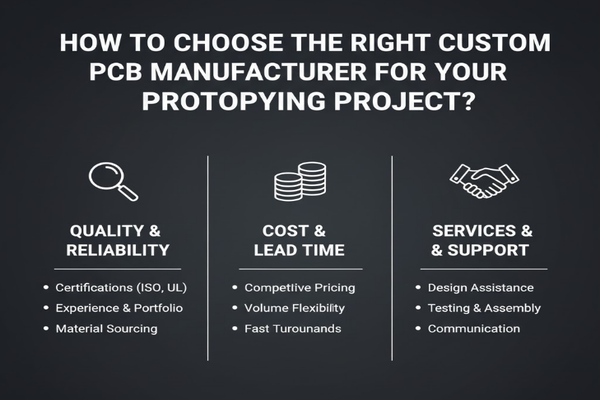
I've learned that a good manufacturer is a partner. They help you succeed. When I started, I made mistakes. I picked the cheapest option. It cost me more in the long run. Now, I focus on specific criteria. Let me show you how.
Selecting the best manufacturer for a prototyping project is different from choosing one for mass production. Prototypes need flexibility and speed.
Focus on Prototyping Specialists
Many manufacturers cater specifically to prototypes. These companies understand that you might need quick iterations and smaller quantities.
- Turnaround Time[^8]: For prototypes, speed is often more important than the absolute lowest cost. Look for manufacturers with advertised quick-turn services. I’ve often paid a bit more to get boards in a few days rather than weeks. This lets me test and refine my design faster.
- Minimum Order Quantity[^9] (MOQ): Prototyping specialists usually have very low MOQs. Some even allow single-piece orders. This is crucial when you only need a few boards for testing.
- Online Tools and Support: Manufacturers like PCBWAY and JLC offer user-friendly online platforms. You can upload your design files, get instant quotes, and track your order easily. Their customer support often understands the needs of hobbyists and small businesses.
Quality and Reliability
Even for prototypes, quality matters. A faulty prototype wastes time and resources.
- Material Quality: Ask about the materials they use. Ensure they meet industry standards.
- Manufacturing Tolerances: Are they capable of producing boards with the precision your design requires? This is especially important for complex designs with fine traces.
- Reviews and Reputation: Check online reviews and forums. What do other engineers say about their experience with the manufacturer? I always look for feedback on consistency and responsiveness.
Cost vs. Value
While cost is a factor, don't let it be the only one.
- Total Cost of Ownership: Consider the cost of potential re-spins due to poor quality or delays. A slightly more expensive but reliable manufacturer can save you money in the long run.
- Hidden Fees: Ask about tooling costs, shipping, and any other potential charges upfront.
- Value-Added Services: Some manufacturers offer design rule checks (DRC) or free stencil services with prototype orders. These can add significant value.
Communication and Support
Clear communication is vital throughout the prototyping phase.
- Responsiveness: How quickly do they respond to inquiries?
- Technical Support: Do they have engineers who can answer your technical questions? This is invaluable when you encounter design challenges.
| Feature | Prototyping Needs | Bulk Production Needs | My Recommendation for Prototypes |
|---|---|---|---|
| Turnaround Time | Fast, quick-turn | Standard, cost-optimized | Essential |
| Minimum Order Qty | Low (1-10 pieces) | High (1000s of pieces) | Critical |
| Cost Focus | Value, avoiding re-spins | Lowest unit cost | Balance of cost and reliability |
| Online Tools | User-friendly, instant quote | Direct communication, custom quote | Highly beneficial |
| Technical Support | Readily available, responsive | Project manager assigned | Key for problem-solving |
Conclusion
Navigating custom PCB costs means understanding the process, choosing suitable manufacturers for prototypes (PCBWAY, JLC) or bulk (South-Electronic), and balancing cost with quality.
[^1]: Understanding the factors that affect Custom PCB costs can help you budget effectively and avoid unexpected expenses. [^2]: Learn about the pricing structure for Prototype orders to make informed decisions for your projects. [^3]: Learn about Schematic Capture and its role in defining electrical connections in your PCB. [^4]: Understanding PCB Layout can help you optimize design and reduce costs in your projects. [^5]: Explore the various Surface Finishes available and their impact on cost and performance. [^6]: Explore the pros and cons of SMT and Through-Hole assembly methods to choose the best for your project. [^7]: Discover why South-Electronic is a top choice for high-volume PCB production with excellent quality. [^8]: Understanding Turnaround Time can help you choose a manufacturer that meets your project deadlines. [^9]: Learn about Minimum Order Quantity requirements to find a manufacturer that fits your prototyping needs.