
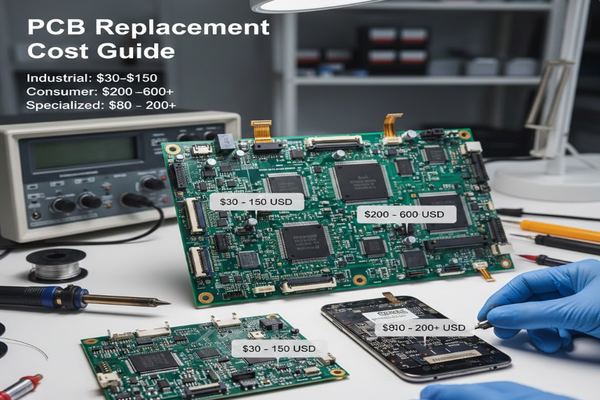
Struggling with a broken device due to a faulty PCB? The cost of fixing it can be a real headache. You want a clear answer, right?
Replacing a PCB can range from a few dollars for simple industrial boards to over a thousand dollars for complex consumer electronics[^1] or specialized equipment, including labor costs. The exact price depends on the board's complexity, component expense[^2], and labor for repair.
I remember when my old refrigerator stopped working, and I thought I would need a whole new one. It turned out to be a simple control board. Knowing the factors that affect PCB replacement costs saved me a lot of money and helped me decide if repair was the right choice. Let's break down these costs and understand what goes into them.
How is the price calculated for a PCB?
A failing electronic device can be incredibly frustrating, leaving you wondering about repair costs. Understanding how PCB prices are calculated is key to knowing what you might pay.
The price of a PCB is not just one number. It includes the board, components, and labor. Simple boards can be cheap, but complex ones with many parts and layers cost much more. This makes sense when you think about all the tiny parts.
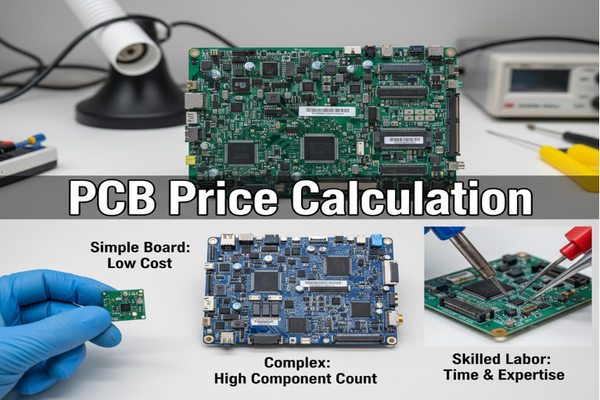
When I first started looking into electronics, I thought all circuit boards were pretty much the same. I quickly learned this was not true. The final cost of a PCB really depends on a few major things. First, how big is the board? Larger boards use more material, which means more cost. Second, how many layers does it have? A simple board might have two layers, but a complex one in a smartphone could have ten or more. More layers mean a harder manufacturing process and higher costs. Third, what materials are used? Some PCBs use standard FR-4 material[^3], which is common. Others need special materials for high-frequency signals[^4] or high temperatures, and these cost more. Fourth, how many components are on the board, and what kind are they? High-end processors or special sensors can be very expensive. Small, common resistors are cheap. The density of components also plays a role; a board packed with tiny parts is harder to make. Finally, the manufacturing process itself matters. Is it a standard run, or does it need special processes like fine-pitch soldering or advanced testing? All these things add up.
| Factor | Impact on Cost | Examples |
|---|---|---|
| Size | Larger boards use more material, increasing cost. | Small sensor board vs. large motherboard |
| Layers | More layers increase complexity and manufacturing. | 2-layer simple board vs. 10-layer smartphone PCB |
| Material Type | Special materials for performance cost more. | FR-4 (standard) vs. high-frequency laminates |
| Components | Expensive or high-density components raise cost. | Microcontroller vs. basic resistor |
| Manufacturing | Complex processes or testing add to the price. | Standard assembly vs. fine-pitch BGA soldering |
How to reduce your PCB cost?
Thinking about a PCB replacement can bring up worries about the bill. You want to save money, right? Knowing how to cut PCB costs is important for your wallet.
You can reduce PCB costs by simplifying the design, choosing standard materials, and ordering larger quantities. Also, picking common components and working with efficient manufacturers helps lower the overall price significantly.
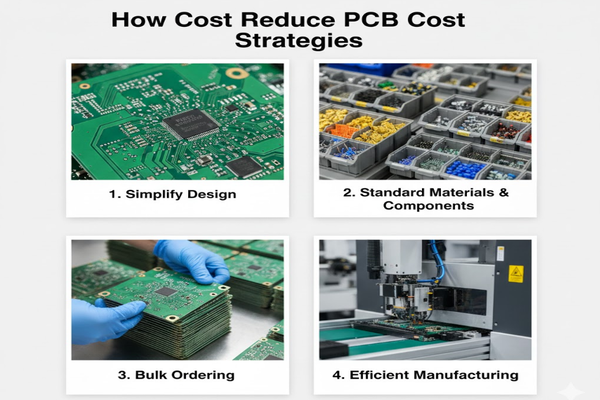
I once had a project where the initial PCB quote was way too high. I almost gave up on it. But then I looked at ways to cut costs without losing quality. It really opened my eyes. One of the biggest ways to reduce cost is to simplify your design. Every extra feature, every non-standard size, adds to the price. Think about making the board smaller if possible, or reducing the number of layers. Each layer adds a lot to the manufacturing time and material. Second, stick to standard materials like FR-4. If you need special materials, the cost will jump up quickly. Third, consider your order quantity. Manufacturers give better prices for larger orders. If you only need one board, it will be much more expensive per unit than if you order a hundred. Fourth, use commonly available components. Exotic parts are expensive and harder to get. A standard resistor costs pennies, but a custom chip can cost many dollars. Fifth, optimize your manufacturing process. Can you avoid very fine traces or tiny drill holes? These things add complexity and cost. Finally, work with a manufacturer who is transparent about their pricing and can offer design-for-manufacturability (DFM)[^5] advice. They might see ways to save money that you missed.
| Strategy | Description | Benefit |
|---|---|---|
| Simplify Design | Reduce board size, layers, and feature complexity. | Lower material use, easier manufacturing, less labor. |
| Standard Materials | Use common materials like FR-4. | Cheaper material cost, wider availability. |
| Increase Quantity | Order more boards at once. | Volume discounts, lower per-unit cost. |
| Common Components | Select readily available and inexpensive parts. | Reduced component cost, easier sourcing. |
| DFM Practices | Design for easier manufacturing. | Fewer errors, faster production, lower labor cost. |
What is the cheapest PCB finish?
When you are looking at PCB replacement, every detail matters, including the surface finish. You might wonder which option is kindest to your budget.
The cheapest PCB finish is typically Hot Air Solder Leveling (HASL)[^6] or Lead-Free HASL. These finishes use a process that coats the copper pads with solder, offering good solderability at a low cost, making them a popular choice for many applications.

I remember being confused by all the different PCB finishes when I first started learning about them. It seemed like there were so many options, and each had its own pros and cons. When it comes to cost, HASL is almost always the winner. It has been around for a long time, and the process is well-understood and cheap to do. Basically, the board gets dipped in molten solder, and then hot air knives blow off the extra solder, leaving a thin, even coating. This makes the pads ready for soldering components. Lead-Free HASL is similar but uses lead-free solder to meet environmental rules, and it is still very cost-effective. Other finishes, like ENIG (Electroless Nickel Immersion Gold)[^7], OSP (Organic Solderability Preservatives)[^8], or Immersion Silver[^9], offer different benefits. ENIG gives a very flat surface and good shelf life, which is great for fine-pitch components, but it costs more because gold is expensive. OSP is very thin and environmentally friendly, but its shelf life is shorter. Immersion Silver provides good solderability but can tarnish. For most general-purpose applications where cost is a main concern, HASL or Lead-Free HASL are usually the go-to options. They provide a solid, reliable finish without breaking the bank, making them ideal for many consumer electronics and industrial applications.
| Finish Type | Cost | Pros | Cons |
|---|---|---|---|
| HASL (Lead-Free) | Low | Good solderability, widely used, robust. | Uneven surface, not ideal for fine-pitch components. |
| OSP | Low-Medium | Flat surface, environmentally friendly. | Shorter shelf life, sensitive to handling. |
| Immersion Silver | Medium | Flat surface, good solderability. | Can tarnish, migration issues possible. |
| ENIG | High | Very flat surface, long shelf life, robust. | High cost due to gold content, black pad risk. |
Conclusion
PCB replacement costs depend on board complexity, materials, and labor. Understanding these factors helps manage expenses.
[^1]: Discover the types of complex consumer electronics that often require specialized PCB repairs. [^2]: This resource will explain how the cost of components can significantly influence PCB pricing. [^3]: Explore the properties of FR-4 material and why it's commonly used in PCB manufacturing. [^4]: Learn about the importance of high-frequency signals in PCB design and their impact on performance. [^5]: Learn how DFM practices can help reduce costs and improve the efficiency of PCB production. [^6]: Explore the benefits and applications of HASL as a cost-effective PCB finish. [^7]: Learn about the ENIG finish and its benefits for high-performance PCB applications. [^8]: This resource will explain the OSP finish and its advantages in PCB production. [^9]: Explore the characteristics of Immersion Silver and its applications in PCB design.

.jpg)