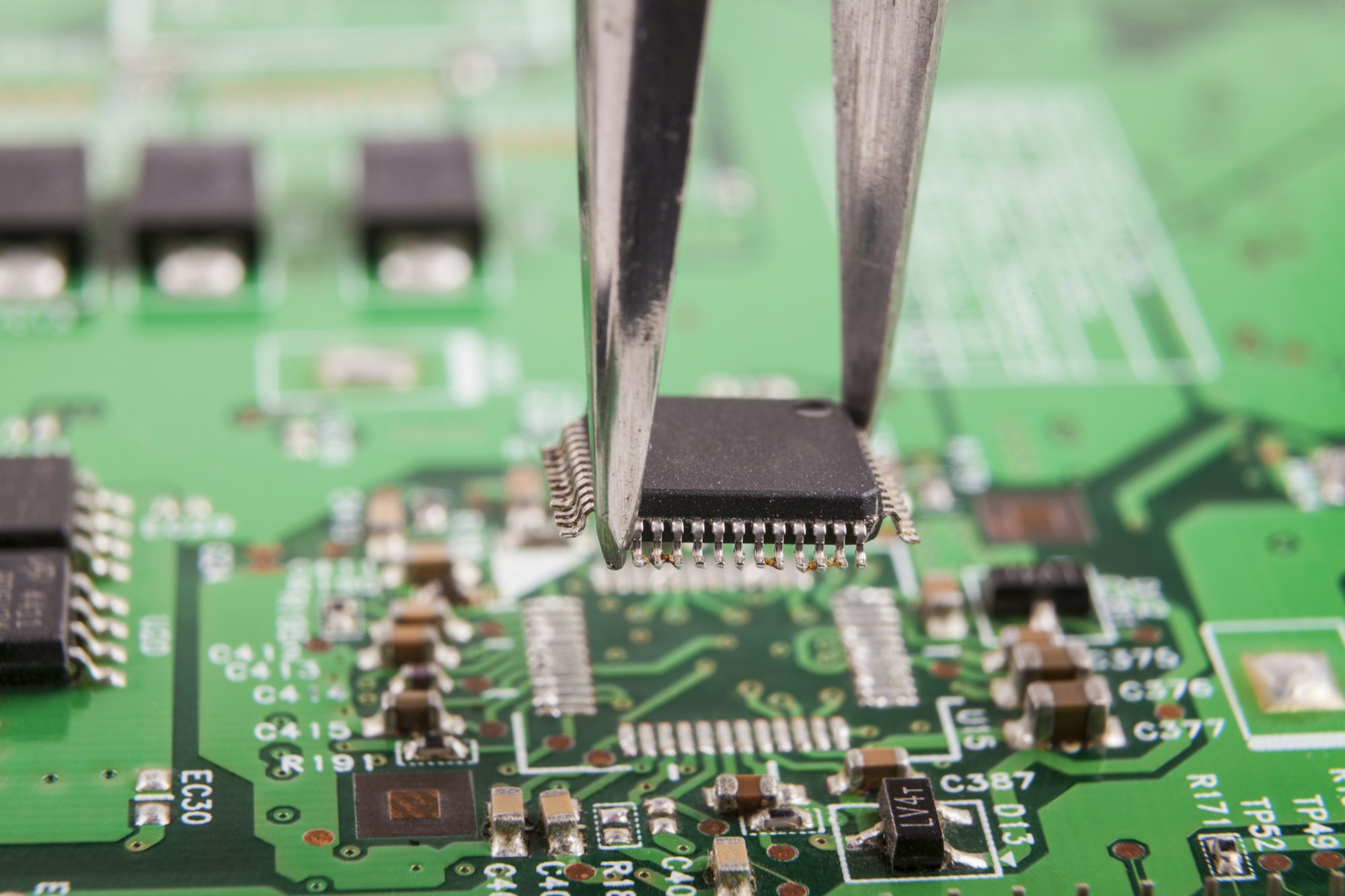
Dealing with PCB material choices can be a headache, right? Picking the wrong one can mess up your whole design.
FR-1 PCB[^1] is ideal for ultra-low-cost, simple, single-layer applications like basic consumer electronics or power adapters where high performance isn't needed. However, its limitations in heat, moisture resistance[^2], and suitability for multilayer designs[^3] make it unsuitable for complex or high-performance projects.
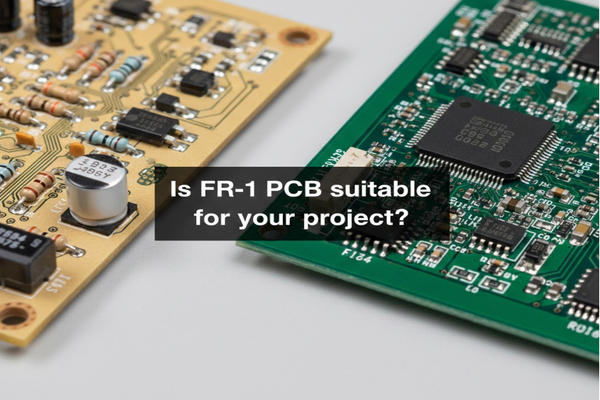
Choosing the right material for your printed circuit board (PCB) is a big decision. It impacts cost, performance, and reliability. Let's break down if FR-1 is the right fit for you.
What are the differences between FR-1, FR-2, FR-3, and FR-4?
Struggling to tell your PCB materials apart? Knowing the differences is key to making a good choice.
FR-1, FR-2, FR-3, and FR-4 are all types of PCB laminates, but they differ in composition, properties, and applications. FR-1 and FR-2 are paper-based, FR-3 is paper-based with epoxy, and FR-4 is glass-fiber based with epoxy.
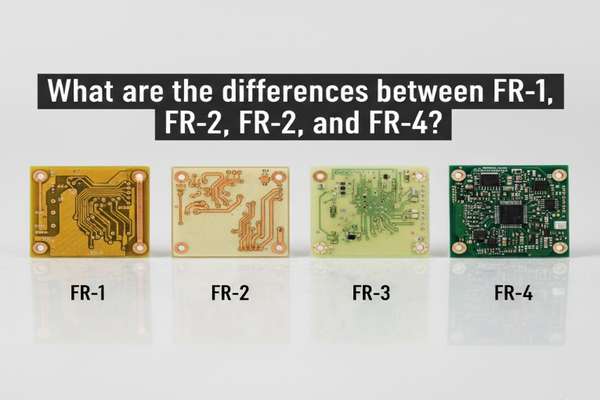
When I started in electronics, all these FR numbers confused me. It turns out each one has a specific use. FR-1 uses paper and phenolic resin. It's cheap and works for simple boards. Think old calculators or basic power adapters. Its glass transition temperature (Tg)[^4] is around 130°C. This means it can get soft if it gets too hot. While it meets UL94 V-0[^5] for flame resistance, it doesn't handle heat or moisture well. You can't use it for boards with many layers or tiny traces. Also, through-hole plating, where you plate the inside of a drilled hole, is a no-go; the material might crack. FR-2 is very similar to FR-1, also paper-phenolic, but it has slightly better electrical properties. FR-3 uses paper but adds epoxy resin, which improves its mechanical strength and moisture resistance compared to FR-1 and FR-2. FR-4, however, is the most common. It uses woven fiberglass cloth and epoxy resin. This makes it much stronger, more stable, and better for high-performance applications. It has a higher Tg, often above 170°C, and excellent electrical properties, making it suitable for complex, multilayer boards. I often recommend FR-4 for most modern designs due to its versatility and robustness.
| Feature | FR-1 | FR-2 | FR-3 | FR-4 |
|---|---|---|---|---|
| Composition | Paper + Phenolic | Paper + Phenolic | Paper + Epoxy | Glass Fiber + Epoxy |
| Cost | Very Low | Low | Medium | Medium to High |
| Tg (°C) | ~130 | ~105 | ~130 | >170 |
| Applications | Simple, single-layer | Simple, single-layer | Consumer, automotive | High-performance, multilayer |
| Flame Retardancy | UL94 V-0 | UL94 V-0 | UL94 V-0 | UL94 V-0 |
| Multilayer | No | No | Limited | Yes |
| Through-hole Plating | No | No | Limited | Yes |
How do I choose the right material for my PCB?
Feeling overwhelmed by PCB material options? Selecting the right one is crucial for your project's success.
To choose the right PCB material, consider factors like cost, operating temperature, frequency requirements, mechanical strength, and environmental conditions. Match the material's properties to your application's specific demands to ensure optimal performance and reliability.
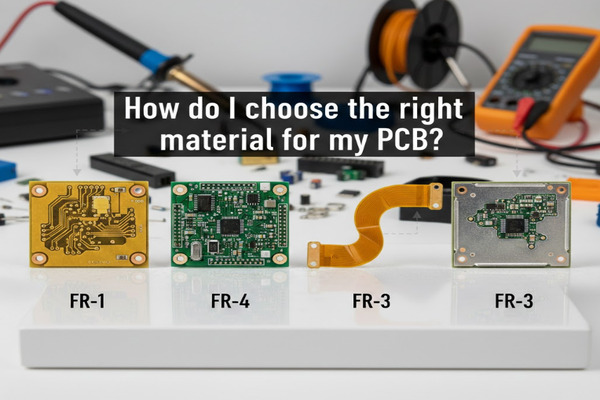
Choosing the right material isn't just about what's cheapest; it's about matching the board to its job. When I'm designing a new product, I always ask a few key questions. First, what's the budget? If it's a super-low-cost item like a toy, FR-1 might be okay. But if it's for something more important, I look at the operating environment. Will it get hot? Will it be exposed to moisture? FR-1's limited heat and moisture resistance quickly rule it out for many applications. For example, if I'm building a power supply, I know it will generate heat, so FR-1 is out. The glass transition temperature (Tg) is important here. If your board operates above its Tg, it can deform, causing serious problems. Second, what kind of signals are running on the board? For high-frequency signals, you need materials with a low dielectric constant (Dk)[^6] and low dissipation factor (Df)[^7] to prevent signal loss. FR-1 is not good for high frequencies. Third, how complex is the board? If it needs multiple layers or fine traces, FR-1 won't work because it can't handle the manufacturing processes, like plating through-holes, without damage. I also consider the expected lifespan and reliability. For critical applications, sacrificing a bit on material cost upfront often saves a lot of headaches and recalls later. Always think about the long-term performance and potential failure points.
How can I ensure the procurement and manufacturing quality of FR-1 PCBs?
Worried about getting reliable FR-1 PCBs? Quality control is vital, even for low-cost materials.
To ensure FR-1 PCB quality, work with reputable suppliers, verify material specifications, and conduct thorough inspections. Even for cost-effective materials, consistent quality control during manufacturing and procurement is essential for dependable performance.
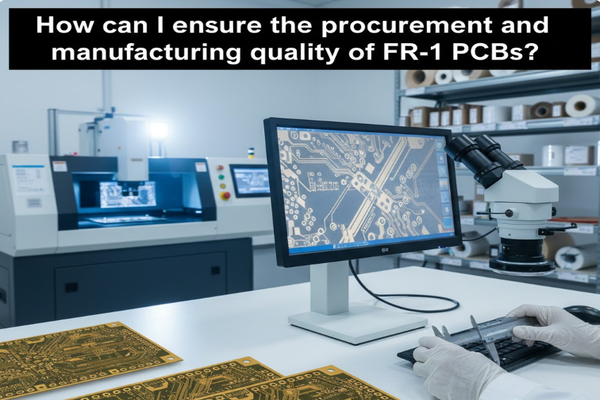
Even though FR-1 is a basic material, you still need to ensure its quality. My first step is always to find a trusted supplier. I ask for their material datasheets and check for certifications like UL (Underwriters Laboratories) approval for flame retardancy. Even for FR-1, a UL94 V-0 rating is a must. During procurement, I always specify clear requirements, including thickness tolerance, copper foil thickness[^8], and any specific surface finishes, even if it's just basic rosin flux. I've learned that vague specifications often lead to unexpected quality issues. For manufacturing, I visit the factory if possible or work closely with a third-party inspection service. I pay attention to the drilling process, as FR-1 is prone to delamination around holes. I also check for consistent etching and proper solder mask application. Because FR-1 has poor dimensional stability compared to FR-4, it can warp, especially during reflow soldering. This is something I specifically look for. Finally, I perform incoming inspections on every batch. I check dimensions, look for delamination, warpage, and any visual defects[^9]. I also do basic electrical tests if the design allows for it. It's about setting clear expectations and then verifying that those expectations are met at every step. Even for a low-cost material, quality matters for your product's overall reliability.
Conclusion
FR-1 PCB is best for simple, low-cost projects but has limitations in heat, moisture, and complexity. Choose your material wisely!
[^1]: Explore this link to understand the specific applications and benefits of using FR-1 PCB in your projects. [^2]: Discover why moisture resistance is crucial for PCB longevity and performance, especially in humid environments. [^3]: Find out the complexities involved in multilayer PCB designs and how to choose the right materials for them. [^4]: Understand the significance of Tg in PCB materials and how it impacts the performance of your designs. [^5]: Explore the UL94 V-0 rating and its importance in ensuring flame resistance for PCB materials. [^6]: Learn about the role of dielectric constant in PCB design and its impact on signal integrity. [^7]: Discover how dissipation factor affects the efficiency of PCB materials, especially in high-frequency applications. [^8]: Learn about how copper foil thickness affects the electrical performance and reliability of PCBs. [^9]: Discover techniques for identifying visual defects in PCBs to ensure high-quality production.