My PCB project budget is tight. I need to know the real cost. Are you tired of hidden fees and unexpected expenses?
PCB costs[^1] vary widely. A simple double-sided board[^2] can be $10-$20 for small orders. Complex boards can be hundreds. High volume or overseas sourcing often lowers prices significantly.
I always wonder about PCB costs. It feels like a mystery sometimes. Let's break down what really drives the price.
What Factors Will Affect PCB Cost?
PCB costs surprise many people. Does the price always reflect quality? Are there hidden factors?
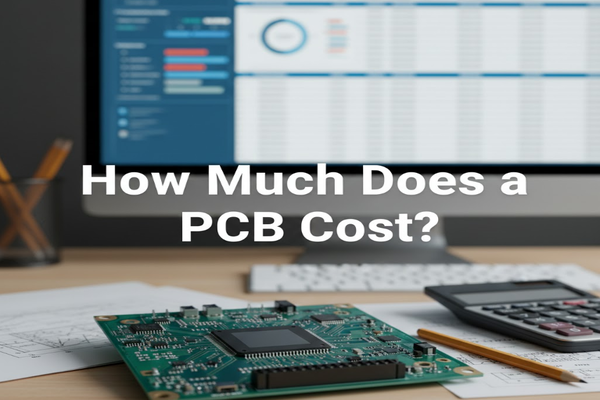
Many things affect PCB cost. These include board size[^3], layers, material, and complexity. Also, order volume[^4], manufacturing process, and shipping impact the final price.
When I first started designing PCBs, I assumed price was mostly about size. I was wrong. The factors are much more intricate. Understanding them helps in making smart choices. My early projects taught me that cutting corners on material or design complexity to save a few dollars often led to bigger problems later. This is why a deeper look into each factor is important.
Material Selection
The material type makes a big difference. FR-4 is standard and cheap. High-frequency boards use special laminates[^5]. These cost more. Flexible PCBs also cost more because of unique materials.
| Material Type | Characteristics | Typical Cost Impact |
|---|---|---|
| FR-4 | Standard, good electrical/mechanical properties | Low |
| High-Tg FR-4 | Higher temperature resistance | Medium |
| Rogers/High Frequency | Low loss, stable dielectric constant | High |
| Polyimide (Flex) | Flexible, bendable | High |
Number of Layers
More layers mean higher cost. A 2-layer board is cheaper than a 4-layer. Each layer adds complexity. It also adds more manufacturing steps. This increases labor and material use.
Board Size and Shape
Larger boards use more material. This increases cost. Irregular shapes might need special routing. This also adds to the price. Standard rectangular shapes are usually cheapest.
Hole Size and Type
Smaller drill sizes increase cost. Microvias and buried/blind vias add much more. These need special drilling methods. My experience showed me that even a few blind vias can significantly push up the price of a prototype run.
Surface Finish
Different finishes have different costs. HASL[^6] (Hot Air Solder Leveling) is common and cheap. ENIG (Electroless Nickel Immersion Gold) costs more but offers better flatness and shelf life. My projects often specify ENIG for fine-pitch components.
Trace Width and Spacing
Finer traces and tighter spacing need precise manufacturing. This increases difficulty and cost. Standard trace width[^7]s are more economical.
Order Volume
This is a big one. Larger orders spread setup costs over more units. This makes the per-unit cost lower. Prototypes always cost more per board. I learned this the hard way when ordering just five boards for testing.
How to Reduce PCB Cost on Printed Circuit Board?
Is your PCB budget a concern? Do you want to cut costs without sacrificing quality? There are ways to save money.
Yes, you can reduce PCB costs. Design choices, material selection, and order volume all play a role. Careful planning and good communication with manufacturers help lower expenses.
I have often faced situations where I needed to cut down PCB costs. It is a common challenge for engineers and hobbyists alike. I learned that small changes in design can lead to big savings. Sometimes, just talking to the manufacturer about my budget helped me find alternative solutions. It is about being smart and proactive.
Optimize Board Size
Smaller boards use less material. Try to make your board as compact as possible. This also reduces shipping weight. Every millimeter counts when you are trying to cut costs.
Reduce Layer Count
If possible, design your circuit on fewer layers. For example, a 2-layer board is often much cheaper than a 4-layer. Carefully review if extra layers are truly necessary. My rule of thumb is to start with the minimum and only add layers if absolutely required by circuit performance.
Use Standard Materials
Stick to FR-4 if your application allows. Avoid exotic materials unless critical. Special materials are often pricey and have longer lead times.
Standardize Hole Sizes and Vias
Use common drill sizes. Avoid microvias, buried vias, and blind vias if possible. These advanced features significantly increase manufacturing complexity and cost. When I had to use microvias, I saw the price jump almost immediately.
Choose Cost-Effective Surface Finish
HASL is usually the cheapest option. If your design permits, opt for HASL over more expensive finishes like ENIG. Check your component requirements to see if HASL is suitable.
| Surface Finish | Pros | Cons | Cost Impact |
|---|---|---|---|
| HASL (Hot Air Solder) | Low cost, good solderability | Uneven surface, not for fine pitch | Low |
| ENIG (Immersion Gold) | Flat surface, good for fine pitch, long shelf life | Higher cost, uses gold | Medium-High |
| OSP (Organic Solder Preservative) | Environmentally friendly, flat surface | Short shelf life, sensitive to handling | Low |
Increase Trace Width and Spacing
Use wider traces and larger spacing where design rules permit. This makes manufacturing easier and reduces the chance of defects. It also avoids extra charges for tight tolerances.
Increase Order Volume
Order more boards if you can. The per-unit cost drops significantly with higher volumes. If you need 10 boards now, consider ordering 20 if you know you will use them. The savings can be substantial. This is a common strategy I use for projects with expected future demand.
Panelization Efficiency
Work with your manufacturer to optimize panelization. Efficient panel layouts can use material better. This reduces waste and cost.
What is PCB Cost Per Square Inch?
Have you heard about "cost per square inch[^8]" for PCBs? Do you know what it means for your budget? It is a common metric, but can be misleading.
PCB cost per square inch is a way to estimate price. It varies greatly by board complexity, volume, and features. For simple boards, it can be cents. For complex ones, it can be dollars.
I used to think "cost per square inch" was a simple number. I quickly learned it is not. It changes so much based on the design. My first few prototype quotes showed me that a tiny, complex board could have a higher per-square-inch cost than a large, simple one. It is a rough guide, not a fixed rule.
General Range
For very high-volume, simple 2-layer boards, the cost can be as low as $0.01 to $0.05 per square inch. This is for large-scale production, often overseas. When I ordered thousands of simple breakout boards, I saw prices in this range.
Prototype and Low Volume
For prototypes or small-volume orders, especially for simple 2-layer boards, the cost often ranges from $0.50 to $2.00 per square inch. This includes setup fees spread over few units. My typical prototype runs fall into this category.
Complex Boards
For multi-layer boards (4-8 layers), HDI, or those with special materials, the cost per square inch can easily go up to $5.00, $10.00, or even $20.00+. This includes the added complexity and material expense.
Factors Influencing Per Square Inch Cost
- Complexity: More layers, finer traces, special vias drastically increase this value.
- Volume: Lower volumes mean higher per-square-inch cost due to fixed setup charges.
- Material: Exotic materials drive this up.
- Manufacturing Location: Overseas manufacturers often offer lower per-square-inch costs.
| Complexity Level | Typical Cost Per Sq. Inch (Prototype) | Typical Cost Per Sq. Inch (Mass Prod.) |
|---|---|---|
| Simple 2-layer | $0.50 - $2.00 | $0.01 - $0.20 |
| 4-layer | $2.00 - $5.00 | $0.15 - $1.00 |
| 6+ layers/HDI | $5.00 - $20.00+ | $0.50 - $5.00+ |
It is important to remember that "cost per square inch" is more of a quick estimation tool than a precise pricing model. Always get detailed quotes for your specific design. I learned not to rely solely on this metric for budgeting.
Conclusion
PCB costs vary widely. Factors like layers, materials, and volume impact price. By understanding these, you can reduce expenses.
[^1]: Understanding the factors influencing PCB costs can help you budget effectively and avoid unexpected expenses. [^2]: Explore the cost range for double-sided boards to better plan your PCB project budget. [^3]: Understanding the impact of board size on costs can help you design more cost-effective PCBs. [^4]: Understanding the relationship between order volume and pricing can help you save on costs. [^5]: Learn about the cost implications of using special laminates in PCB design. [^6]: Explore the advantages and cost-effectiveness of using HASL for your PCB projects. [^7]: Discover how adjusting trace width can lead to cost savings in PCB production. [^8]: Explore the concept of cost per square inch to better estimate your PCB budget.