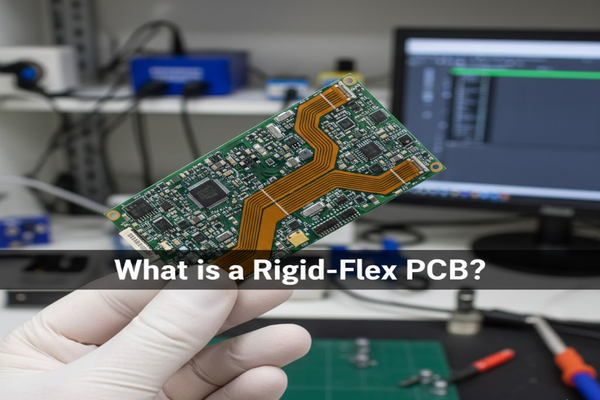
Do you struggle with bulky electronics[^1]? Are you tired of unreliable connections[^2]? I've found a solution that makes devices smaller and more dependable.
A rigid-flex PCB combines rigid and flexible circuits into one continuous board. This hybrid design[^3] eliminates many connectors, making devices compact and highly reliable by integrating flexible layers[^4] as built-in connectors.
I remember when my first wearable device was too clunky. The maze of wires and connectors made it prone to failure. Then, I discovered rigid-flex PCBs, a game-changer in electronic design that solves these very problems.
What are rigid-flex PCBs used for?
Are your electronic designs limited by space or durability? Do traditional PCBs fail in dynamic environments? I’ve seen rigid-flex PCBs overcome these challenges in many applications.
Rigid-flex PCBs are used in compact and high-reliability devices like medical implants[^5], aerospace systems[^6], and consumer wearables[^7]. They allow for 3D packaging[^8], saving space and improving performance in demanding conditions.
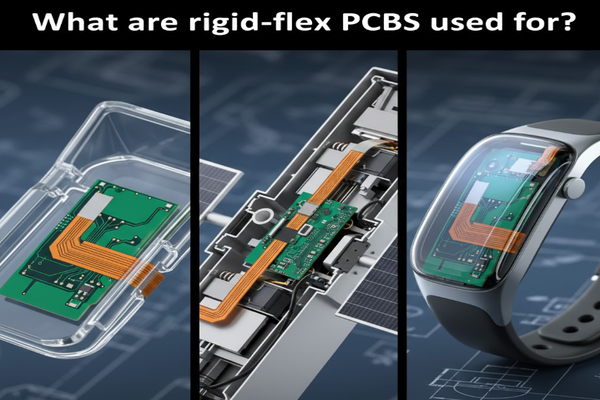
When I think about the advancements in modern electronics, I see rigid-flex PCBs everywhere. They’re crucial for devices where space is tight and reliability is key. Imagine a pacemaker that needs to be tiny and fault-tolerant, or a satellite component that must withstand extreme vibrations. These are prime examples of where rigid-flex technology shines. The ability to bend and fold the circuit allows for complex shapes, fitting into tight enclosures without compromising electrical integrity. This also means fewer solder joints[^9] and connectors, which are often points of failure in traditional designs. I've personally seen how a medical device, once a jumble of wires, became sleek and robust after incorporating a rigid-flex design. It’s like giving your electronics a flexible spine that also carries all the necessary signals.
Key Applications of Rigid-Flex PCBs
| Application Sector | Description | Benefits of Rigid-Flex PCB |
|---|---|---|
| Medical | Pacemakers, hearing aids, diagnostic equipment | Miniaturization, high reliability, biocompatibility |
| Aerospace | Satellites, avionics, control systems | Lightweight, vibration resistance, extreme environment tolerance |
| Consumer | Smartwatches, cameras, virtual reality headsets | Compact size, improved aesthetics, enhanced durability |
| Automotive | ADAS, infotainment systems, engine control units | Space savings, shock resistance, thermal management |
How are rigid-flex PCBs made?
Ever wondered how such intricate circuits are crafted? Does the process seem impossibly complex? I’ve explored the manufacturing steps, and it’s a fascinating blend of precision and material science.
Rigid-flex PCBs are made through a multi-step process involving lamination of flexible and rigid layers, etching conductive patterns, and precise assembly. This intricate fabrication ensures a seamless integration of diverse material properties.
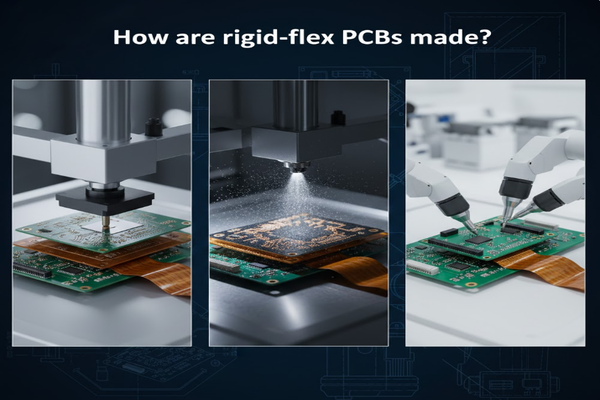
I've always been curious about how things are built, especially complex electronics. The creation of a rigid-flex PCB is not a simple task; it demands incredible precision and a deep understanding of materials. It starts with carefully preparing the flexible core, often made from polyimide, which is known for its excellent electrical and mechanical properties. Then, conductive layers are added, usually copper, through a process called lamination. This is where the rigid and flexible sections begin to take shape. Imaging and etching remove unwanted copper, leaving behind the circuit traces. What's truly unique is how these flexible layers are then bonded to rigid sections using specialized adhesives and high-pressure lamination. This selective lamination creates areas where the board is rigid and areas where it remains flexible. Each step is carefully controlled to ensure the final product meets strict performance requirements.
Manufacturing Steps for Rigid-Flex PCBs
| Step | Description | Key Considerations |
|---|---|---|
| Flexible Core Prep | Cleaning and preparing polyimide or similar flexible dielectric material. | Material selection, surface treatment for adhesion. |
| Conductor Lamination | Applying copper foils to the flexible core using adhesive. | Uniform pressure, temperature control, adhesive type. |
| Imaging & Etching | Transferring circuit patterns onto copper layers using photolithography and removing excess copper. | Precision alignment, etchant chemistry, linewidth control. |
| Rigid Layer Lamination | Bonding rigid FR-4 layers to specific flexible sections using prepreg and high pressure/temperature. | Alignment accuracy, void prevention, lamination cycle parameters. |
| Drilling | Creating vias and holes for component placement and interconnections in both rigid and flexible sections. | Drill bit selection, depth control, deburring. |
| Plating | Electroless and electrolytic plating to create conductive pathways through vias and surface finishes. | Plating thickness, uniformity, adhesion. |
| Solder Mask & Legend | Applying protective solder mask and silkscreen legend for component identification. | Mask alignment, curing process, ink adhesion. |
| Final Fabrication | Routing, profiling, and electrical testing to ensure functionality and dimensional accuracy. | Tooling accuracy, electrical continuity, impedance testing. |
What are the benefits of rigid-flex PCBs?
Are you looking for ways to improve device performance and reduce manufacturing costs? Do you need a more reliable and compact solution for your electronics? I've found rigid-flex PCBs offer compelling advantages.
Rigid-flex PCBs provide significant benefits, including space savings, reduced weight, enhanced reliability, and simplified assembly processes. They lead to more compact, robust, and cost-effective electronic devices by integrating multiple functions into one board.
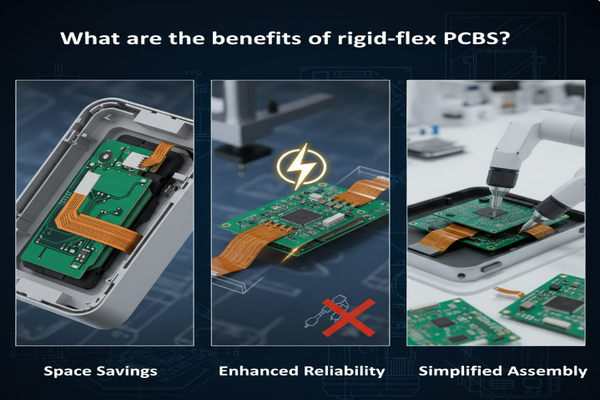
From my experience in electronic design, I can tell you that the benefits of rigid-flex PCBs are transformative. First, the most obvious advantage is space savings. By integrating rigid and flexible components, designers can create 3D interconnections, allowing for much smaller and more complex device geometries. This is crucial for today's miniaturized electronics. Second, there's a significant reduction in weight. Replacing traditional wires and connectors with flexible circuit traces lightens the overall product, which is vital for applications like drones, satellites, and portable medical devices. Third, and perhaps most importantly, reliability improves dramatically. By removing numerous solder joints and connectors, the potential points of failure are minimized, leading to a more robust and dependable product. Finally, manufacturing and assembly become simpler. A single rigid-flex board replaces an array of individual PCBs and connecting cables, streamlining the production line and often reducing overall costs.
Comparative Benefits of Rigid-Flex PCBs
| Feature | Traditional PCBs + Cables | Rigid-Flex PCBs | Advantage of Rigid-Flex PCB |
|---|---|---|---|
| Space Utilization | Requires more space, 2D design | Optimal 3D packaging | Up to 60% space reduction, compact design. |
| Weight | Heavier due to connectors/cables | Lighter, integrated wiring | Significant weight reduction (e.g., aerospace applications). |
| Reliability | Many failure points (solder joints, connectors) | Fewer failure points, integrated | Higher operational reliability, fewer intermittent faults. |
| Assembly Complexity | Complex manual assembly, many steps | Simplified, fewer assembly steps | Reduced assembly time and labor costs. |
| Signal Integrity | Can be compromised by connectors | Excellent, direct signal paths | Better high-frequency performance and reduced noise. |
| Thermal Management | Limited options for heat dissipation | Can be designed for improved thermal pathways | Enhanced heat dissipation in critical areas. |
| Cost (NRE) | Lower initial tooling | Higher initial tooling | Higher upfront cost, but lower total cost of ownership. |
| Cost (Unit) | Varies with component count | Lower per-unit cost in high volume | Cost-effective for mass production due to reduced assembly. |
What can South-Electronic do for rigid-flex PCB manufacturing?
Are you seeking a reliable partner for your next rigid-flex PCB project? Do you need expertise in complex circuit board manufacturing? I’ve looked into South-Electronic, and they offer comprehensive solutions.
South-Electronic specializes in rigid-flex PCB manufacturing, providing expert design support, advanced fabrication capabilities, and stringent quality control. They offer end-to-end solutions for complex, high-reliability applications, ensuring your project's success from concept to production.
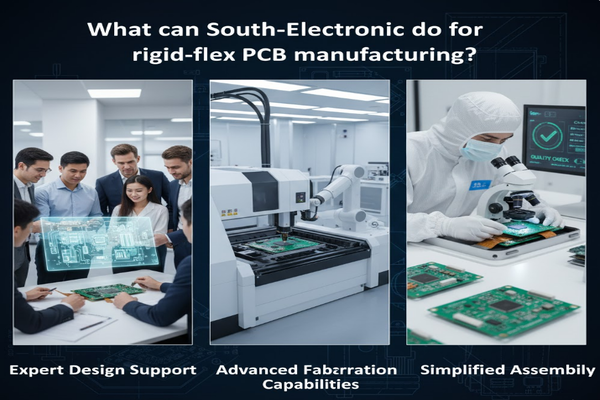
When I'm considering a manufacturing partner, I look for a company that not only has the technical prowess but also a deep understanding of complex requirements. South-Electronic stands out in the rigid-flex PCB market. They aren't just manufacturers; they are solution providers. They offer comprehensive support from the initial design phase, helping optimize layouts for manufacturability and performance. Their facilities are equipped with state-of-the-art technology for precise lamination, etching, and drilling, essential for rigid-flex boards. What impresses me most is their commitment to quality control. They implement rigorous testing protocols throughout the production process to ensure every board meets the highest standards of reliability and functionality. This means they can handle everything from prototypes to high-volume production, delivering consistent quality. They understand the nuances of various applications, be it medical, aerospace, or industrial, and tailor their approach accordingly.
South-Electronic's Rigid-Flex PCB Capabilities
| Service Area | Description | Customer Benefit |
|---|---|---|
| Design Assistance | Expert review of customer designs for manufacturability (DFM) and performance optimization. | Reduced design iterations, improved product performance, faster time-to-market. |
| Material Selection | Guidance on choosing appropriate flexible and rigid materials for specific application requirements. | Optimized performance (electrical, mechanical, thermal), cost efficiency. |
| Advanced Fabrication | State-of-the-art equipment for precise lamination, etching, drilling, and routing of complex layers. | High-yield production, consistent quality, ability to handle intricate designs. |
| Quality Assurance | Comprehensive testing including electrical, impedance control, thermal cycling, and visual inspection. | High reliability, compliance with industry standards, reduced field failures. |
| Prototyping | Fast turnaround for initial rigid-flex PCB prototypes. | Quick validation of designs, accelerated development cycles. |
| Mass Production | Scalable manufacturing capabilities for high-volume rigid-flex PCB orders. | Consistent quality at scale, competitive pricing, reliable supply chain. |
| Certifications | Adherence to industry standards such as ISO 9001[^10], AS9100, and medical device standards. | Assurance of quality, compliance, and suitability for critical applications. |
In summary, rigid-flex PCBs combine the best of both worlds, offering compact, reliable, and high-performance solutions. They streamline designs and enhance device durability for countless applications.
[^1]: Learn effective strategies to minimize bulk in electronics for better performance. [^2]: Discover the common issues leading to unreliable connections and how to fix them. [^3]: Find out how hybrid designs improve electronic device performance and reliability. [^4]: Understand the advantages of flexible layers in enhancing PCB functionality. [^5]: Explore how rigid-flex PCBs are revolutionizing medical implant technology. [^6]: Learn about the critical role of rigid-flex PCBs in aerospace applications. [^7]: Discover how rigid-flex technology enhances the performance of wearables. [^8]: Explore the concept of 3D packaging and its impact on electronic design. [^9]: Understand the challenges associated with solder joints and how to mitigate them. [^10]: Discover the significance of ISO 9001 certification in ensuring quality.