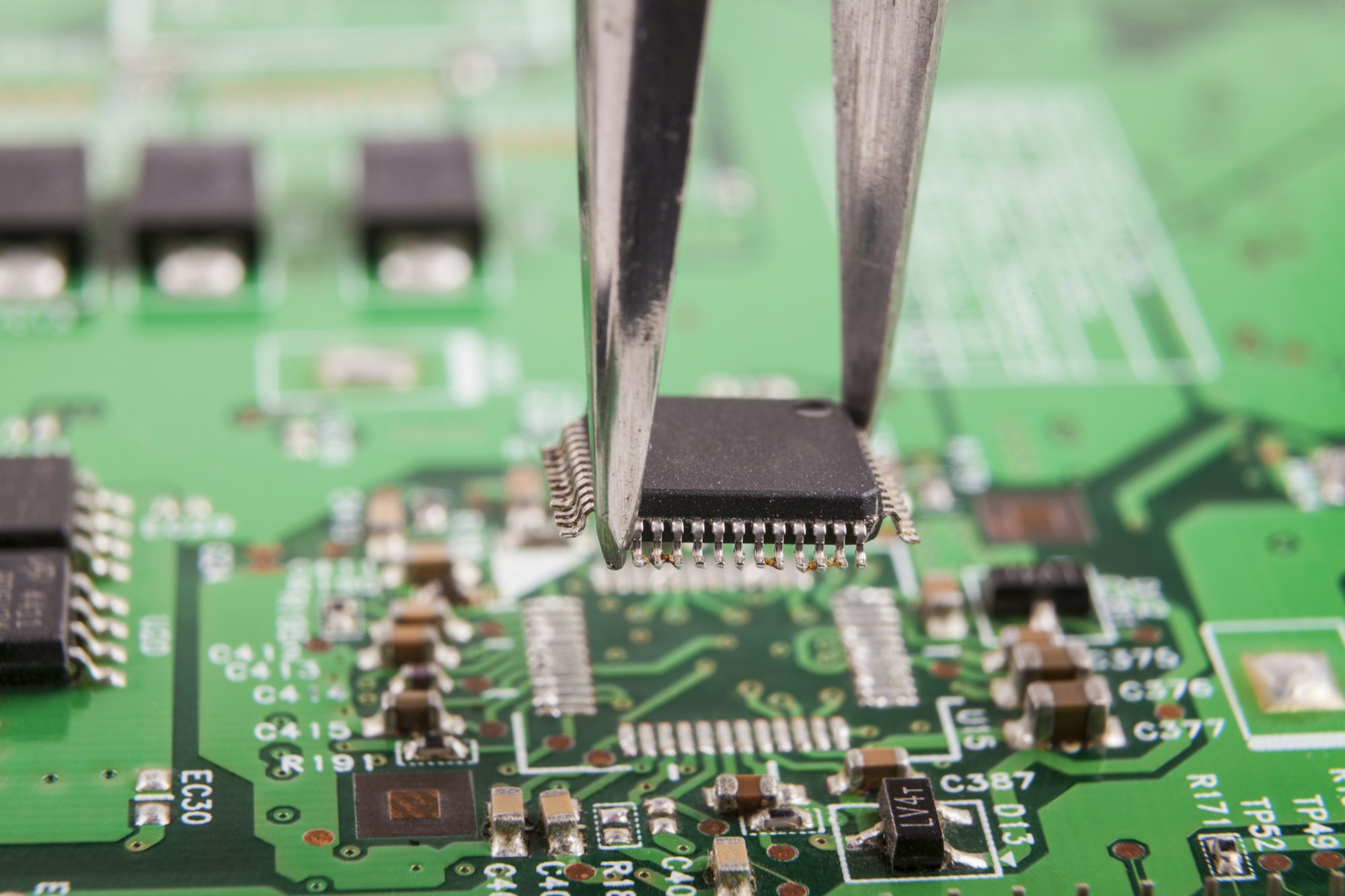
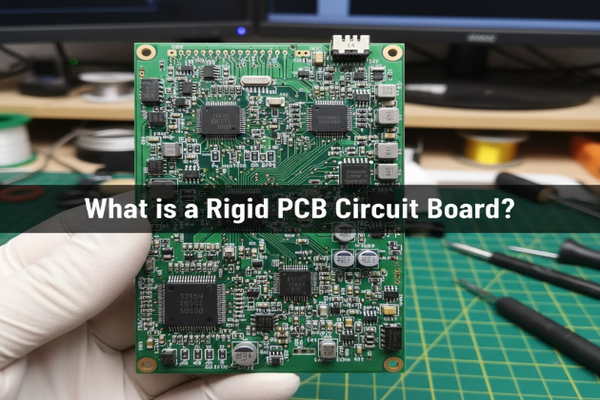
Are you frustrated by unreliable electronics? Many common devices use a core component you might not know about: the rigid PCB.
A rigid PCB is a printed circuit board built on a strong, unbending material, often a glass fiber epoxy laminate like FR-4[^1]. It gives electronics stability and long-lasting performance.
Understanding rigid PCBs helps you grasp the foundation of many electronic devices around us. Let's explore why these boards are so important and how they make our gadgets work well.
What are the characteristics of a rigid PCB?
Ever wonder what makes some electronics so robust? It often comes down to the characteristics of the rigid PCB inside.
Rigid PCB[^2]s are known for durability[^3], heat management[^4], and high circuit density[^5]. They give electronics a stable platform, ensuring long-term reliability[^6] for many applications.
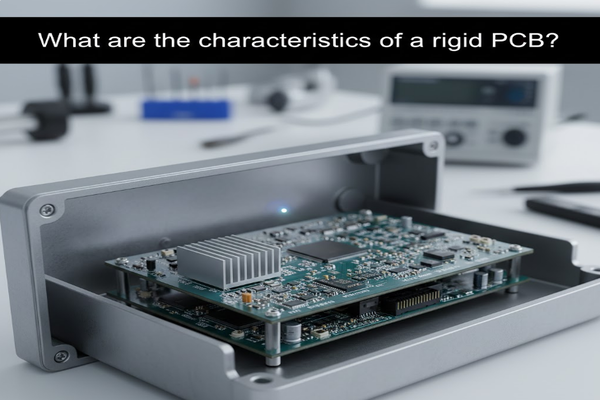
Let’s look closer at the main features that define rigid PCBs. These traits make them a top choice for countless electronic products. I have personally seen how these features impact device performance.
Key Characteristics
- High Durability: Rigid PCBs use sturdy materials. This makes them resistant to physical stress and vibrations. They do not bend, which protects the circuits.
- Heat Dissipation: These boards handle heat well. The materials used help move heat away from sensitive components, preventing damage.
- High Density and Complexity: You can pack many components onto a rigid PCB. This allows for complex circuit designs in a small space.
- Dimensional Stability: They keep their shape, even with changes in temperature or moisture. This means connections stay secure over time.
- Long-Term Reliability: Because they are stable and durable, rigid PCBs provide consistent performance. This is why many everyday devices use them.
| Characteristic | Description | Benefit |
|---|---|---|
| Durability | Resists physical stress and vibrations. | Longer product lifespan. |
| Heat Dissipation | Efficiently moves heat away from components. | Prevents overheating, improves performance. |
| Circuit Density | Allows for many components in a small area. | Compact and powerful devices. |
| Dimensional Stability | Maintains shape and size under varying conditions. | Reliable connections, consistent operation. |
| Reliability | Provides consistent and predictable electrical performance over time. | Reduces failures, trustworthy electronics. |
What are the differences between rigid and flexible PCBs?
Confused about why some devices bend and others don't? It often comes down to choosing between rigid and flexible PCBs.
Rigid PCBs are solid and stable, perfect for fixed internal components. Flexible PCBs bend and fold, ideal for compact, irregular spaces where movement is needed.
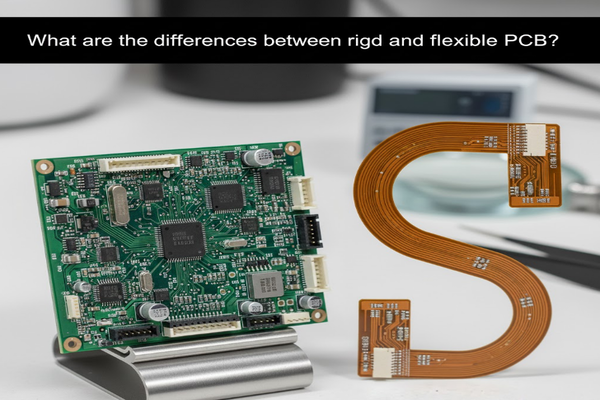
When designing an electronic product, picking the right PCB type is very important. I remember a project where choosing flexible over rigid made all the difference in fitting components into a tight space. Let’s break down the key differences between these two types.
Structural and Material Differences
- Rigid PCBs: Made from stiff materials like FR-4 (glass-reinforced epoxy). They maintain a fixed shape.
- Flexible PCBs: Made from thin, bendable plastics like polyimide. They can be bent, twisted, and folded.
Mechanical Flexibility
- Rigid PCBs: No flexibility. Once made, they cannot change their shape.
- Flexible PCBs: Very flexible. They can fit into tight spaces and move with the device.
Durability and Strength
- Rigid PCBs: Offer high mechanical strength and protection for components.
- Flexible PCBs: While bendable, they are generally less rigid and may be more prone to tearing if repeatedly stressed at a single point.
Size and Weight
- Rigid PCBs: Can be thicker and heavier due to their substrate.
- Flexible PCBs: Are thin and light, which is good for small or wearable devices.
Electrical Performance
- Rigid PCBs: Often provide better heat dissipation and signal integrity for high-frequency applications.
- Flexible PCBs: Can have different electrical properties due to their materials, sometimes requiring careful design for high-speed signals.
Cost and Manufacturing
- Rigid PCBs: Generally more cost-effective to manufacture in high volumes.
- Flexible PCBs: Typically more expensive due to specialized materials and complex manufacturing processes.
| Feature | Rigid PCB | Flexible PCB |
|---|---|---|
| Structure/Material | Stiff (e.g., FR-4 epoxy laminate) | Flexible (e.g., polyimide film) |
| Mechanical Flexibility | None, fixed shape | High, can bend and fold |
| Durability | High mechanical strength | Good, but less resistant to repeated stress |
| Size/Weight | Thicker, heavier | Thinner, lighter |
| Circuit Density | High | Moderate to high |
| Electrical Performance | Good heat dissipation, signal integrity | Specific design needed for high-speed signals |
| Cost | Generally lower cost | Higher cost |
| Applications | Computers, TVs, industrial equipment | Wearables, medical implants, cameras |
What are some applications for rigid PCBs?
Curious about where rigid PCBs show up? They are everywhere, powering the devices we use daily.
Rigid PCBs are used in a vast range of electronics, from consumer gadgets to heavy industrial machinery. They provide the stable, reliable platforms needed for many essential functions.
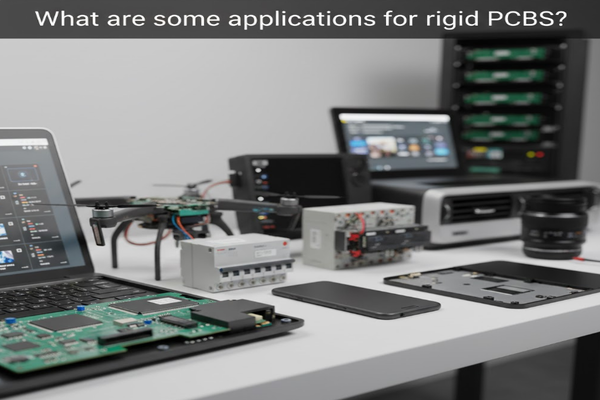
It's amazing how many devices rely on these unbending boards. I often find myself thinking about how much technology is built on this core component. Let's look at some common places you'll find rigid PCBs at work.
Consumer Electronics
- Computers: The motherboard in your desktop or laptop is a prime example of a rigid PCB. It connects the CPU, memory, and other components.
- Televisions: Inside your TV, rigid PCBs control image processing, sound, and power delivery.
- Smartphones (partially): While phones use flexible elements, critical parts of the main logic board are rigid for stability.
- Home Appliances: Refrigerators, washing machines, and microwaves all have rigid PCBs controlling their functions.
Industrial and Commercial
- Industrial Control Systems: Machinery in factories uses rigid PCBs for precise control and monitoring.
- Medical Devices: Equipment like X-ray machines and diagnostic tools rely on stable rigid PCBs for accuracy.
- Automotive Electronics: Many car components, from engine control units to infotainment systems, use rigid PCBs.
- Telecommunications: Servers, routers, and base stations use robust rigid PCBs to manage vast amounts of data.
Other Applications
- LED Lighting[^7]: Rigid PCBs are used in LED arrays to mount the LEDs and manage heat effectively.
- Security Systems: Cameras, alarm systems, and access control units utilize rigid PCBs for dependable operation.
Rigid PCBs are chosen for these applications because they offer the stability, durability, and density needed for complex and reliable electronic functions. Their robust nature means devices can operate consistently over long periods.
| Application Category | Examples | Why Rigid PCB? |
|---|---|---|
| Consumer Electronics | PCs, TVs, Gaming Consoles, Smart Home Devices | Stability for complex circuits, durability for daily use |
| Industrial Equipment | Factory Automation, Control Panels, Robotics | Robustness in harsh environments, high reliability |
| Medical Devices | Diagnostic Equipment, Monitoring Systems, Scanners | Precision, long-term stability, critical performance |
| Automotive | Engine Control Units, Infotainment Systems, ABS | Resistance to vibration, heat, and harsh conditions |
| Telecommunications | Servers, Routers, Base Stations, Network Switches | High data density, reliable signal integrity |
What types of rigid PCBs does South-Electronic offer?
Looking for specific rigid PCB solutions? South-Electronic provides a variety to meet diverse design needs.
South-Electronic offers a range of rigid PCBs, including single-sided, double-sided, and multilayer boards. They cater to different complexities and performance requirements for various applications.
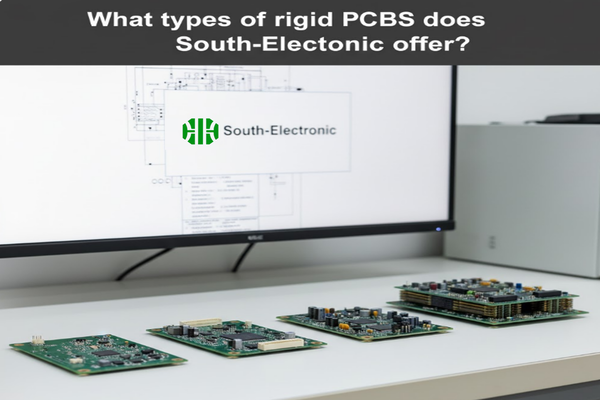
Choosing the right type of rigid PCB is crucial for any project. I've worked with many clients who needed very specific board types for their unique products, and South-Electronic has a strong lineup. Let’s explore the kinds of rigid PCBs they provide.
Single-Sided Rigid PCBs
- Description: These boards have conductive copper traces on only one side of the substrate. Components are typically mounted on one side, and soldering happens on the other.
- Simplicity: They are the simplest and most cost-effective type of PCB.
- Applications: Best for basic electronic devices where circuit density is low, such as power supplies, simple sensors, and LED lighting.
Double-Sided Rigid PCBs
- Description: These boards have copper traces on both the top and bottom sides of the substrate. Holes (vias) connect traces between the two layers.
- Increased Density: They allow for higher circuit density than single-sided boards.
- Applications: Widely used in consumer electronics, industrial controls, and automotive dashboards, offering a good balance of cost and complexity.
Multilayer Rigid PCBs
- Description: These boards consist of three or more conductive copper layers, stacked together and separated by insulating material (prepreg). All layers are interconnected through vias.
- High Complexity: They offer the highest circuit density and enable very complex designs.
- Applications: Essential for advanced electronics like motherboards, servers, data storage, and telecommunications equipment that require high performance and many interconnections.
South-Electronic also offers customization in materials, finishes, and specific design rules. This ensures that customers get a rigid PCB tailored exactly to their product’s needs, whether it's for high-frequency signals or harsh environmental conditions. They focus on providing reliable and efficient manufacturing solutions.
| PCB Type | Description | Advantages | Typical Applications |
|---|---|---|---|
| Single-Sided | Conductive layer on one side. | Lowest cost, simple manufacturing. | LED circuits, simple power supplies, calculators. |
| Double-Sided | Conductive layers on both sides, connected by vias. | Higher circuit density, better routing flexibility. | Consumer electronics, industrial controls, printers. |
| Multilayer | Three or more conductive layers, stacked. | Highest density, complex routing, improved EMI. | Computers, servers, medical devices, aerospace. |
| Material Options | FR-4, high-Tg FR-4, special laminates. | Tailored for heat, frequency, and environment. | High-power devices, RF applications. |
| Surface Finishes | ENIG, HASL, OSP. | Optimized for solderability, shelf life, cost. | Varies by application and assembly requirements. |
Conclusion
Rigid PCBs are fundamental to modern electronics, providing stable and durable platforms for countless devices. Choosing the right type depends on your specific needs for complexity, reliability, and cost.
[^1]: Find out why FR-4 is a popular choice for PCB manufacturing and its advantages. [^2]: Explore this link to understand the fundamental role of Rigid PCBs in electronics. [^3]: Understand the factors contributing to the durability of PCBs in electronic devices. [^4]: Explore effective heat management techniques used in PCBs to enhance performance. [^5]: Learn about the importance of circuit density in PCB design and its applications. [^6]: Explore the factors that contribute to the long-term reliability of PCBs. [^7]: Discover the advantages of using rigid PCBs in LED lighting applications.