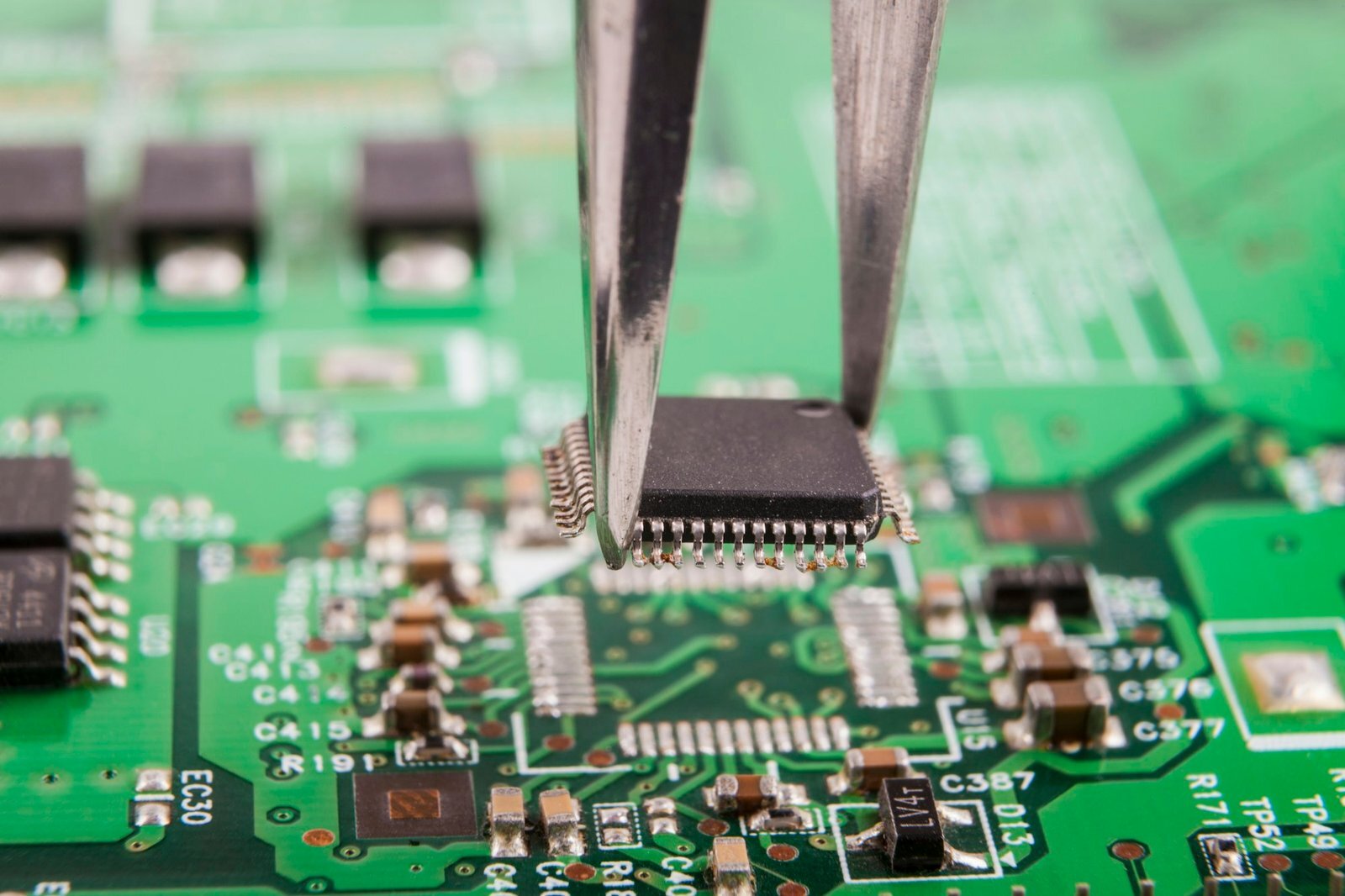
Ever wondered what makes your electronic devices tick? The secret often lies in a material you've never heard of: Copper Clad Laminate. It's time to uncover its crucial role!
Copper Clad Laminate[^1] (CCL) is the backbone of printed circuit boards (PCBs), providing the essential structure and electrical pathways. It's a foundational material, crucial for interconnecting electronic components.
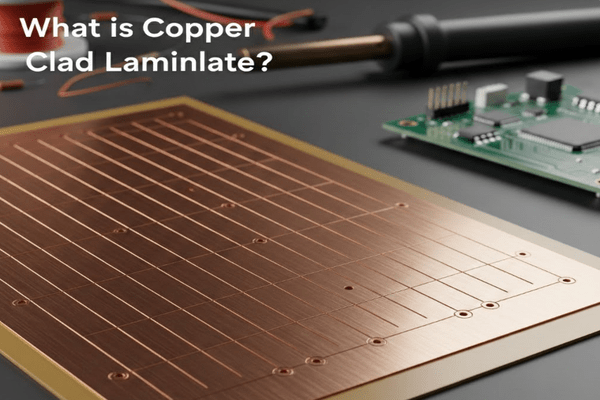
When I first started in electronics, the complexity of circuit boards seemed daunting. But understanding CCL was like finding the Rosetta Stone for PCB manufacturing, unlocking the secrets of how these intricate systems are built. Come along as we uncover the fundamental role it plays in our modern world.
What types of CCL are there?
With so many electronics around us, how do manufacturers choose the right base material? It all depends on the specific needs of the circuit.
CCL comes in various types, each suited for different applications based on its properties like heat resistance, flexibility, and electrical performance. Common types include FR-4[^2], CEM-1[^3], and flexible CCLs[^4].
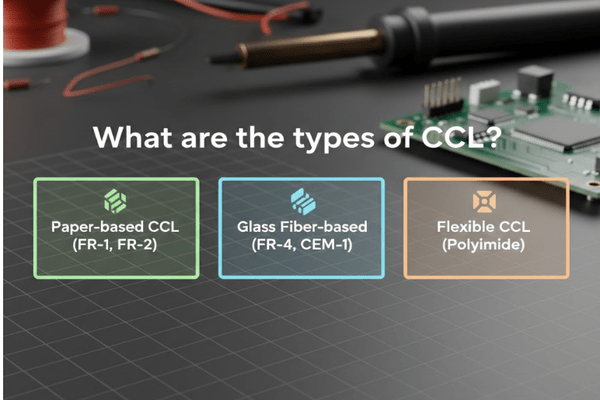
Understanding the different types of CCL is vital for designing reliable and efficient PCBs. Each type offers a unique balance of cost, performance, and manufacturing ease. For example, FR-4 is a workhorse, ideal for many general-purpose applications due to its good balance of properties and cost-effectiveness. However, for high-frequency or high-temperature environments, more specialized CCLs are needed. Flexible CCLs, on the other hand, allow for dynamic applications where the PCB needs to bend or conform to tight spaces. When I’m working on a new design, I always consider these factors carefully.
Common CCL Types and Their Applications
| CCL Type | Base Material | Key Characteristics | Typical Applications |
|---|---|---|---|
| FR-4 | Woven fiberglass cloth with epoxy resin | High strength, good electrical properties, cost-effective | General purpose PCBs, computers, consumer electronics |
| CEM-1 | Woven glass fabric and paper composite with epoxy | Cost-effective, good punching ability | Single-sided PCBs, less demanding applications |
| CEM-3 | Non-woven glass fabric and woven glass fabric with epoxy | Similar to FR-4[^2] but more economical for some uses | Double-sided PCBs, industrial controls |
| Flexible CCL | Polyimide (PI) or Polyester (PET) film | Flexible, thin, high heat resistance | Wearable devices, automotive electronics, medical devices |
| High-Tg CCL | Specialized epoxy or polyimide resin | High glass transition temperature | High-power applications, automotive, aerospace |
| High-Frequency CCL | PTFE (Teflon) or ceramic-filled hydrocarbons | Low dielectric constant and dissipation factor | RF/Microwave circuits, communication equipment |
What materials are used in CCL construction?
Ever think about what's inside that green board in your gadgets? It’s not just magic; it's a careful combination of specific materials.
CCL is primarily made of a dielectric substrate material[^5] (like fiberglass woven with resin) and a thin layer of copper foil. These layers are bonded together under heat and pressure to create a rigid or flexible sheet.
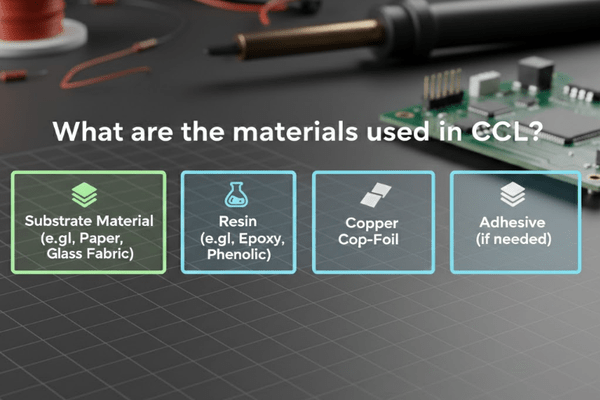
The choice of materials in CCL significantly dictates the PCB's performance, especially in demanding environments. The dielectric material provides insulation and structural support, while the copper foil[^6] conducts electricity. For example, an FR-4 laminate uses woven fiberglass cloth impregnated with epoxy resin. This combination gives it excellent mechanical strength and good electrical insulation. When I’m evaluating a design, I often think about the "thermal expansion coefficient" – how much a material expands with heat. Mismatched expansion between the copper and the substrate can lead to reliability issues. Other materials like polyimide are used for flexible circuits due to their high heat resistance and flexibility. Each component plays a critical role in the final product.
Key Components of Copper Clad Laminate
| Component | Description | Role in CCL |
|---|---|---|
| Copper Foil | Thin sheets of pure copper, typically 18µm to 70µm thick. | Conductor: Forms the electrical traces and pads of the PCB. |
| Dielectric Substrate | Insulating material, often fiberglass cloth impregnated with resin. | Insulator & Support: Provides electrical isolation and mechanical structure. |
| Resin System | Thermosetting resins like epoxy, polyimide, or specialized hydrocarbons. | Binder & Insulator: Impregnates the substrate, provides adhesion, and adds electrical properties. |
| Additives | Flame retardants, fillers, and other chemicals. | Property Enhancers: Improve flame resistance, thermal conductivity, or dielectric constant. |
How does South-Electronic use CCL in PCB manufacturing?
Considering how complex PCBs are, how do companies like South-Electronic ensure quality and precision? It starts with selecting the right CCL.
At South-Electronic, selecting the appropriate CCL is fundamental to our PCB manufacturing process. We carefully match CCL types to customer specifications to ensure optimal performance, reliability, and cost-effectiveness for every circuit board.
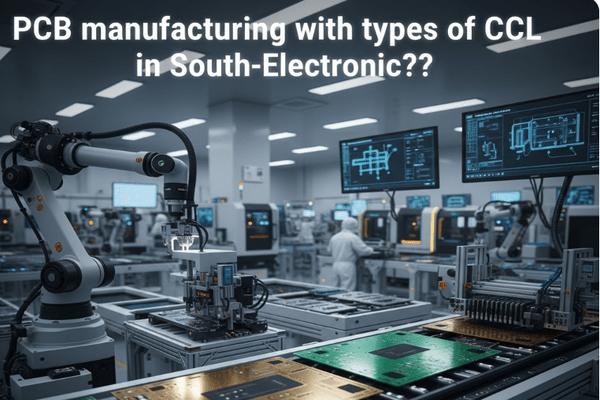
In my experience at South-Electronic, the meticulous selection of CCL is one of the first and most critical steps. We don't just pick FR-4 by default; we analyze the client's application – is it a high-speed data server, an automotive control unit, or a consumer gadget? This dictates everything. For instance, if a design calls for exceptional signal integrity, we might opt for high-frequency laminates. If it's for an automotive engine, high-Tg (glass transition temperature) CCLs are a must to withstand extreme heat cycles. Our process involves detailed material engineering to ensure that the chosen CCL can handle the electrical, thermal, and mechanical stresses it will encounter during its lifespan. It’s about building a solid foundation for performance.
South-Electronic's CCL Selection Process
| Stage | Description | Key Considerations |
|---|---|---|
| Requirement Analysis | Understand client's application, operating environment, and performance needs. | Electrical performance (signal speed, impedance), thermal management, mechanical strength. |
| Material Evaluation | Assess various CCL types against specified criteria. | Dielectric constant (Dk), dissipation factor (Df), thermal expansion (CTE), cost. |
| Prototyping & Testing | Manufacture prototypes with selected CCLs and conduct rigorous testing. | Functional testing, thermal cycling, environmental stress testing. |
| Volume Production | Implement optimized manufacturing processes for the chosen CCL. | Ensuring consistency, yield, and adherence to quality standards. |
Conclusion
Copper Clad Laminate is the essential foundation for all PCBs, with various types and materials carefully chosen to meet diverse electronic demands.
[^1]: Explore the significance of Copper Clad Laminate in electronics and how it impacts device performance. [^2]: Understand why FR-4 is a popular choice for PCBs and its advantages in various applications. [^3]: Explore the unique properties of CEM-1 and its suitable applications in electronic devices. [^4]: Learn about flexible CCLs and how they enable innovative designs in electronics. [^5]: Discover the importance of dielectric substrate materials in ensuring PCB performance. [^6]: Learn about the critical role of copper foil in conducting electricity within PCBs.