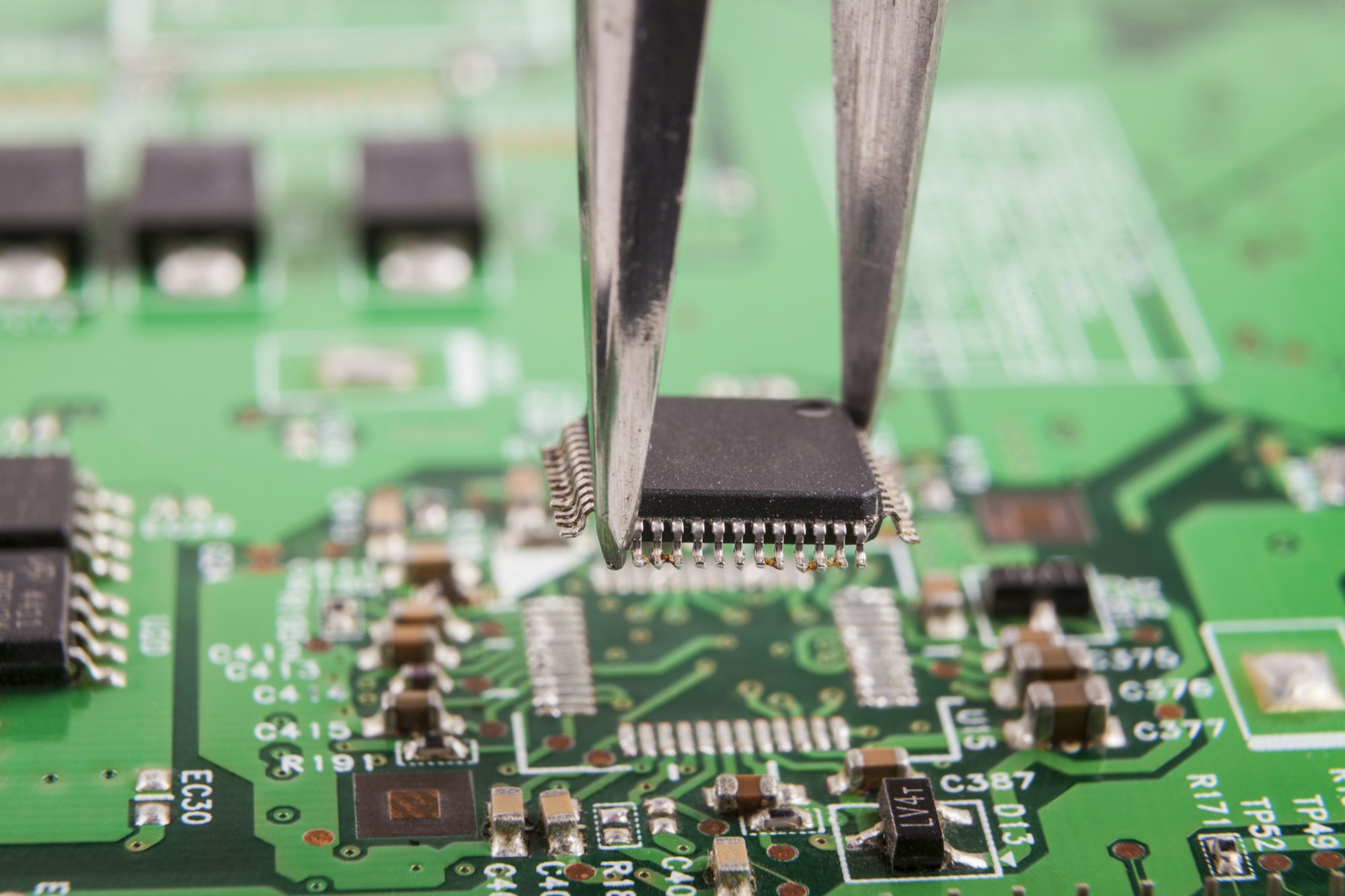

Solder mask, also known as solder block mask, is a thin layer of polymer used on PCBs to prevent solder joints from forming bridges. Solder mask also prevents oxidation and is applied to the copper traces on the PCB.
This is a quick answer, and then we’ll delve into some details, as not all solder masks are the same!
What are the types of PCB solder mask? PCB solder mask acts as a protective coating on copper traces, preventing rust and blocking solder from forming bridges that can cause short circuits. There are four main types of PCB solder mask: epoxy liquid, liquid photoimageable, dry film photoimageable, and top and bottom masks.
But which type of PCB solder mask should you use? That’s right, there are different types for different applications… let’s take a look.
4 Types of Solder Mask
Solder masks vary in their make and materials. How and which solder mask to use depends on the application.

- Top and Bottom Side Masks
Top and bottom solder masks are commonly used by electronics engineers to identify openings in the green solder mask layer. This layer is pre-applied using epoxy or film technology. Component pins are then soldered to the board using openings registered using a mask.
The conductive trace pattern on the top of the board is called the topside trace. Similar to the topside mask, the bottomside mask is used on the reverse side of the board.
- Epoxy Liquid Solder Mask
Epoxy is the cheapest alternative to solder mask. Epoxy is a polymer that is screen-printed onto the PCB. Screen printing is a printing method that uses a fabric mesh to support the ink-blocking pattern. The mesh allows for the identification of open areas for ink transfer. Heat is used in the final step of the process.
- Liquid Photoimageable Solder Mask
Liquid photoimageable mask, also known as LPI, is actually a mixture of two different liquids. The liquid components are mixed before application to ensure a longer shelf life. It is also one of the more economical of the four different types of PCB solder mask.

LPI can be applied by screen printing, curtain coating, or spray coating. The mask is a mixture of different solvents and polymers. As a result, a thin coating can be applied that adheres to the surface of the target area. This mask serves the original purpose of a solder mask, but the PCB does not require any of the final plating coatings commonly available today.
Unlike older epoxy inks, LPI is sensitive to UV light. The panel needs to be covered with a mask. After a short "cure cycle," the board is exposed to UV light using a photoresist or UV laser.
Before applying the mask, the panel needs to be cleaned and free of oxidation. This is accomplished with the help of special chemical solutions. Alternatively, an aluminum oxide solution or scrubbing the panel with a suspended pumice stone can be used.
One of the most common methods for exposing the panel surface to UV light is using a contact printer and film tool. Top and bottom sheets of film are printed using emulsion to block the areas to be soldered. A tool on the printer secures the production panel and film in place. The panels are then simultaneously exposed to a UV light source.
Another technique uses direct laser imaging. However, in this technique, no film or tool is required, as the laser is controlled using fiducial marks on the panel’s copper stencil.
LPI masks are available in a variety of colors, including green (matte or semi-gloss), white, blue, red, yellow, black, and more. The LED industry and laser applications in the electronics industry are encouraging manufacturers and designers to develop more durable white and black materials.
- Dry Film Photoimageable Solder Mask
Dry film photoimageable solder mask uses vacuum lamination. The dry film is then exposed and developed. After the film is developed, the openings are positioned to create a pattern. After this, components are soldered to the copper pads. The copper is then laminated to the board using an electrochemical process.
Copper is layered inside the holes and trace areas. Tin is ultimately used to help protect the copper circuitry. In the final step, the film is removed and the etch marks are exposed. This process also uses heat curing.
Dry film solder mask is often used for high-density wiring boards. As a result, it does not flood into through-holes. These are some of the positive factors for using dry film solder mask.
Deciding which solder mask to use depends on various factors, including the physical size of the PCB, the intended end application, the holes, the components to be used, the conductors, and the surface layout. Most modern PCB designs have access to photoimageable solder mask. Therefore, it will be either LPI or dry film solder mask. The board’s surface layout will help determine the final choice. If the surface topography is uneven, an LPI mask is preferred. Using dry film on uneven topography can trap gases in the spaces formed between the film and the surface. Therefore, LPI is more suitable here.
However, using LPI also has disadvantages. It’s not uniform across the board. You can also get different finishes on the mask layer, each with its own application. For example, a matte finish will reduce solder balling when using solder reflow.
How to Build Solder Mask into Your Design?
Building solder mask into your design is essential to ensure optimal mask application. When designing the board, the solder mask should have its own layer in the Gerber file. Generally, a 2mm border around features is recommended to prevent the mask from being perfectly centered. You should also leave at least 8mm between copper pads to ensure solder bridges do not form.
What is the appropriate solder mask thickness?
The thickness of the solder mask will depend on the thickness of the copper traces on the circuit board. Generally, a 0.5mm solder mask is preferred for masking traces. If you are using a liquid mask, you will need to use different thicknesses for different features. Empty laminate areas may have a thickness of 0.8-1.2mm, while areas with complex features (such as knees) will have thin extensions (approximately 0.3mm).
Conclusion
In summary, solder mask design has a significant impact on the functionality of your application. It plays a crucial role in preventing rust and solder bridges (which can cause short circuits). Therefore, your decision needs to consider the different factors mentioned in this article. We hope this article has helped you better understand the types of PCB solder mask. If you have any questions, or simply need to contact us, we are always happy to assist you.